

 English
 Français
 عربى
How to Choose a Chocolate Moulding Line: Key Specs, Tolerances & Costs
Content
- 1 Define the Product Before You Define the Machine
- 2 Calculate Real Output Instead of Trusting Nominal Speed
- 3 Treat Depositor, Tempering and Cooling as One System
- 4 Moulds, Materials and Changeover Time
- 5 What to Verify Before You Sign the Contract
- 6 Mistakes That Cost More Than the Machine
- 7 FAQ: Chocolate Moulding Line Selection
A line rated at 10 moulds per minute can still deliver 120 kg/h on 5 g pralines and only about 60 kg/h on 45 g bars. The nominal speed is a machine number; your output is a product number. Buyers who mix the two usually find out during the first commissioning run, when the cooling tunnel turns out to be too short and the deposit weight drifts outside tolerance.
The short version: define the piece first, including weight, shape, shell or solid, and whether the recipe uses real chocolate or compound. Then work out how many moulds per minute that piece demands, and only after that start comparing machines. The sequence below is the one that keeps a moulding line project on budget and on schedule.
Define the Product Before You Define the Machine
A moulding line is a tool for one shape and one weight range at a time. Before you request quotations, write down five things:
- Piece weight range, for example 4 g to 12 g for pralines or 40 g to 100 g for bars. A depositor tuned for 5 g tablets will not fill a 100 g bar mould accurately.
- Structure: solid tablet, shell with filling, one-shot two-colour, or a bar with inclusions.
- Chocolate type: real chocolate based on cocoa butter needs tempering; compound coating does not, but it still needs controlled cooling.
- Mould layout: cavities per mould and mould footprint, because these set the geometry of the whole line.
- Target output in kg/h and the number of shifts per week.
The weakest-link rule applies here. A line is limited by its slowest stage, so a fast depositor feeding an undersized cooling tunnel only produces soft centres, sticking and demoulding faults. If you can describe the piece in these terms, a supplier can quote a realistic line instead of a generic one.
Calculate Real Output Instead of Trusting Nominal Speed
Use one formula for every candidate machine you compare:
Output (kg/h) = cavities per mould × piece weight (g) × moulds per minute × 60 ÷ 1000
| Piece weight | Cavities per mould | Moulds per minute | Theoretical output |
|---|---|---|---|
| 5 g praline | 40 | 10 | 120 kg/h |
| 12 g praline | 24 | 9 | about 155 kg/h |
| 25 g filled piece | 12 | 8 | 144 kg/h |
| 45 g bar | 8 | 7 | about 151 kg/h |
Two lessons come out of that table. First, one machine covers a wide output range simply because the mould changes. Second, cycle time is not a constant: a 45 g bar needs a longer cooling residence than a 5 g praline, so moulds per minute must be recalculated for each product rather than copied from the fastest run.
Then apply a realistic efficiency factor. Deposit variations, demoulding faults and mould changes normally consume 10 to 15 percent of theoretical output on a well-run line, and considerably more where a mould change takes 30 minutes instead of 5. A modular line that lets you scale the depositor and tunnel sections separately is usually the safer investment when your product mix is still evolving.
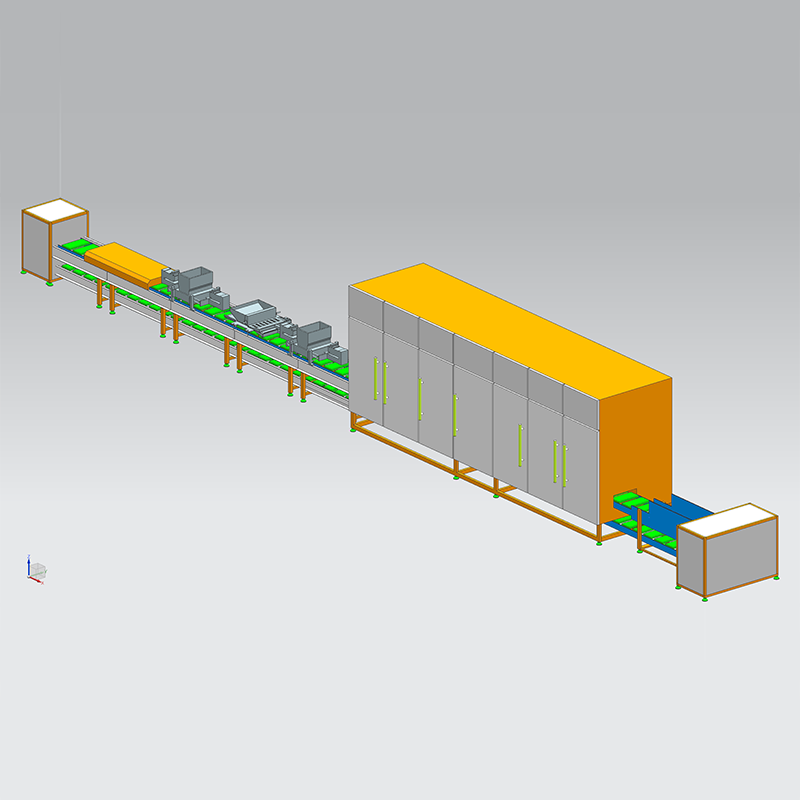
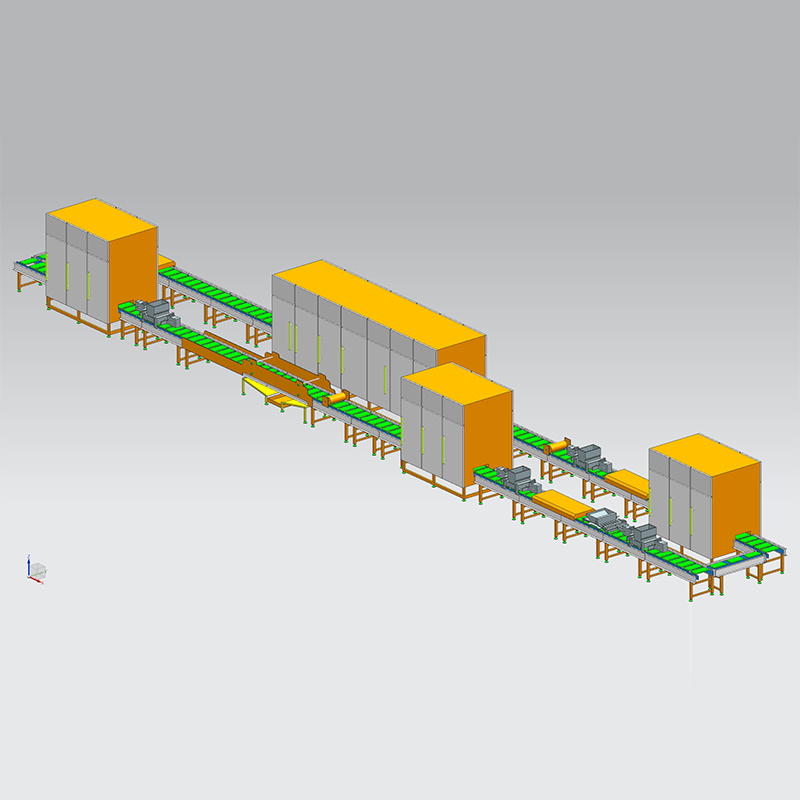
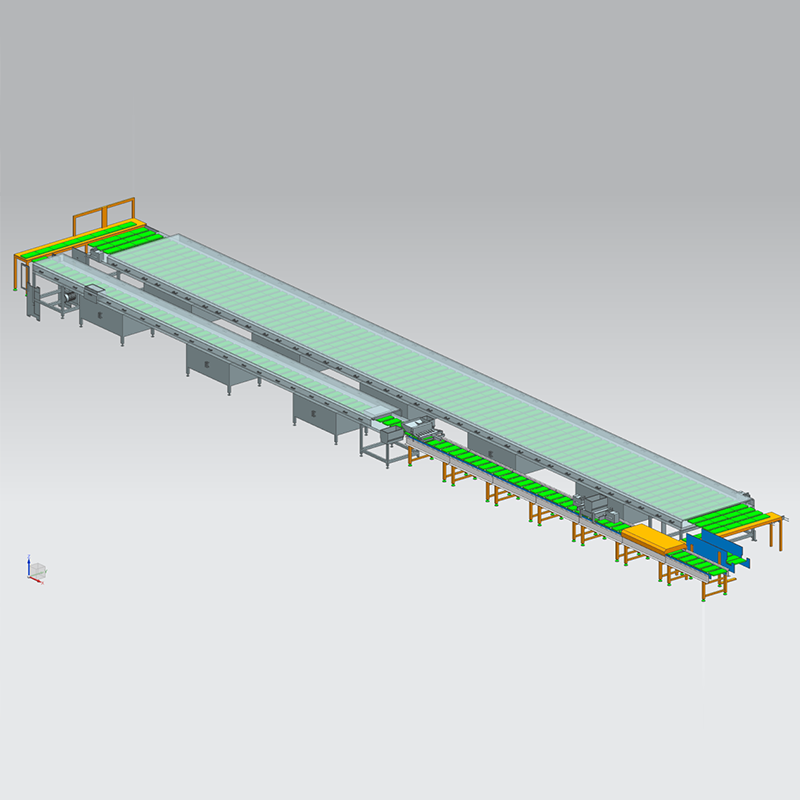 Chocolate Modular Production Line with Vertical CoolingAn automatic modular system integrating mould preheating, depositing, cooling, demolding and conveying, with scalable sections and dual cooling options for evolving product mixes.View Product →
Treat Depositor, Tempering and Cooling as One System
Depositor accuracy decides your giveaway
Ask for the deposit tolerance in writing, not the depositor speed. A tolerance of ±1 to 2 percent per piece is normal for industrial depositors. At ±3 percent on a 12 g piece, you give away roughly 0.36 g per piece, which is a few percent of your chocolate cost across a full shift. Check how the machine handles thick masses, inclusions and two-shot deposits, because viscosity changes between dark, milk and compound recipes.
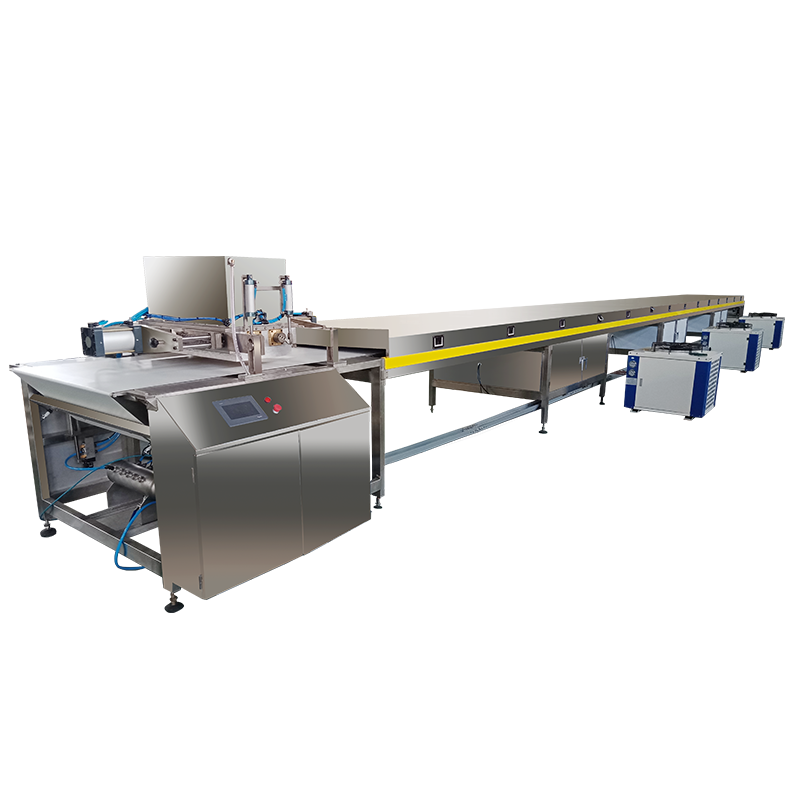
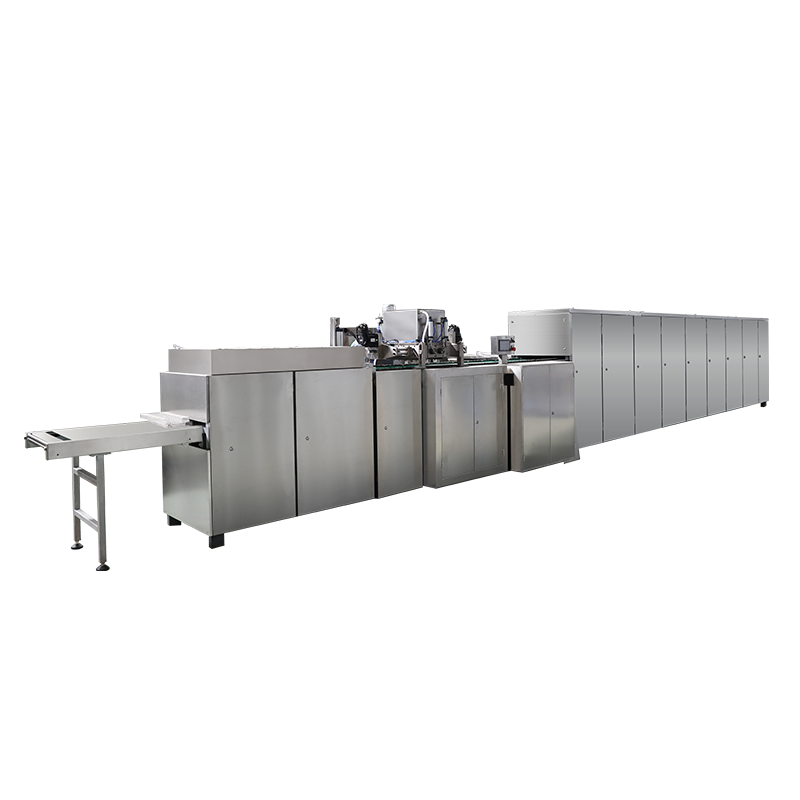 Q110–Q113 Automatic Chocolate Moulding Production LineA fully automatic moulding line for solid and center-filled chocolates, offering one-shot depositing and PLC control across bars, blocks, balls and other shapes.View Product →
Tempering is not optional for real chocolate
Depositing untempered real chocolate gives grey streaks, weak snap and short shelf life. Confirm that the tempering unit holds dark chocolate near 31 °C, milk chocolate around 29 to 30 °C and white chocolate around 28 to 29 °C, and that it recovers quickly after a stop. A continuous tempering unit with a stable temper index is worth more than a higher depositor speed, because rejected pieces cost more than slow ones.
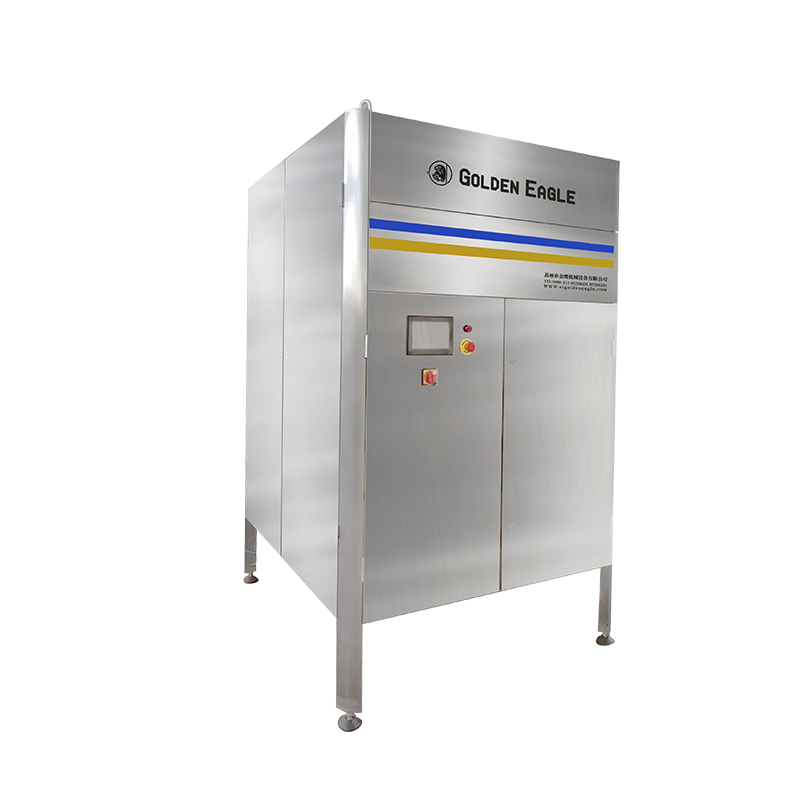 QYJ300 600 1000 Chocolate Tempering MachineA vertical continuous tempering machine with four temperature-adjusting zones and a holding zone, suited to cocoa butter and CBE chocolate recipes.View Product →
Cooling tunnel zones and retention time
A single-zone tunnel is the most common specification error. Real chocolate generally needs 20 to 30 minutes of residence depending on piece weight, with descending zone temperatures and a final zone warm enough to prevent condensation when the bar meets room air. Ask the supplier for the calculated residence time for your heaviest mould, not the average of your range. If the tunnel is sized on the lightest product, the heavy bar will be the one that fails.
Moulds, Materials and Changeover Time
- Mould compatibility: confirm the pitch and mould size range, and whether your existing moulds can run on the new line. Replacing a full mould set is a significant hidden cost.
- Contact materials: product-contact parts should be food-grade stainless steel, with hygienic belt and scraper materials that tolerate cleaning chemicals.
- Changeover: quick-release clamps and a documented changeover procedure should let a trained operator switch moulds in minutes. A line that needs an hour per change limits your flexibility as much as a slow depositor.
- Vibration and demoulding: adjustable vibration helps release air and fill fine detail. Check that amplitude can be tuned per product instead of being fixed at one setting.
Material and hygiene details look minor on a quotation sheet but they decide how much downtime you absorb every week for cleaning.
What to Verify Before You Sign the Contract
- Run an acceptance test on your own recipe and your own mould, and record deposit weights across a full hour.
- Put the weight tolerance and the temper index values in the contract as measurable figures.
- Ask for compliance documents: CE marking for export markets and a certified quality system such as ISO 9001.
- Request a spare parts list with lead times for wear items, including nozzles, pumps and belts.
- Confirm installation, commissioning, operator training and the guaranteed service response time.
If your product is unusual, for example a three-colour shell with a nut inclusion, raise it at the quotation stage rather than after delivery. Most manufacturers can adapt a standard frame through customization work, but engineering hours add to lead time. A component-by-component breakdown of how a chocolate moulding line works is a useful checklist when you prepare that discussion.
Mistakes That Cost More Than the Machine
- Comparing lines by price per kilogram of nominal output instead of measured output on your piece.
- Accepting a cooling tunnel length without a calculated residence time for the heaviest mould.
- Skipping tempering capability to save budget, then buying it later as a retrofit.
- Ignoring mould change time and cleaning time in the weekly capacity plan.
- Signing without an acceptance test, so weight tolerance stays a verbal promise.
FAQ: Chocolate Moulding Line Selection
Q1: How many cavities should my mould have?
It depends on piece weight and the footprint your line accepts. More cavities raise output per cycle but also demand longer cooling and more accurate deposit distribution, so match cavities to the tunnel rather than maximizing them.
Q2: Do I need tempering if I use compound chocolate?
No. Compound coating uses fats that do not require stable crystal formation, so tempering is unnecessary. It still needs controlled cooling and a consistent deposit temperature.
Q3: What output can one moulding line reach?
Small-piece praline lines often run between 100 and 200 kg/h, while larger lines reach several hundred kg/h. The deciding factors are cavities per mould, cycle time, piece weight and the efficiency factor you apply.
Q4: How long should the cooling tunnel be?
Calculate it rather than choosing a standard length. Residence time equals tunnel length divided by chain speed, so the tunnel must be long enough at your highest chain speed to give the heaviest piece its full cooling time.
Choosing a chocolate moulding line comes down to arithmetic plus a few firm questions. Start from the piece, convert it into moulds per minute, size tempering and cooling around that number, and then require the supplier to prove deposit tolerance and cooling residence time during an acceptance test. Do that, and the line you buy will still match your product mix three years from now.