

 English
  Français
  عربى
عربى Chocolate Moulding Line Process: Stage-by-Stage Guide and Buying Specs
Content
- 1 The five stages of a chocolate moulding line process
- 2 Tempering: the stage that decides gloss, snap and shelf life
- 3 Depositing: weight tolerance, viscosity and the one-shot decision
- 4 Cooling and demoulding: follow the curve, not the setpoint
- 5 What to write into the specification
- 6 Questions buyers ask before ordering a moulding line
A moulding line rated at 500 kg/h fills, deposits and ejects close to 40,000 twelve-gram pralines in an hour. Hitting the rate is not the hard part. Holding gloss, snap and a clean release through three weeks in a shipping container is, and that result is decided long before the pieces leave the mould.
The chocolate moulding line process is a fixed sequence: mass holding and feeding, tempering, depositing, vibration, controlled cooling, demoulding and wrapping. Everything upstream of the depositor exists to deliver chocolate at a defined viscosity and crystal state. Everything downstream exists to set that chocolate without destroying the crystal structure you have just built. When a defect shows up at the demoulder, the cause usually sits two stages earlier.
Below is the process stage by stage, with the control points that move quality, the tolerances worth writing into a purchase specification, and the fault patterns that point back to one machine.
The five stages of a chocolate moulding line process
Every quotation describes the same process in different words, so fixing the sequence first makes equipment comparisons much easier to read.
| Stage | What the equipment does | Control point | Typical working value |
|---|---|---|---|
| 1. Mass holding and feeding | Holding tanks keep refined chocolate fluid; pumps deliver it to the temperer | Temperature stability, gentle agitation, no dead corners | 45 to 50 °C in the tank |
| 2. Tempering | The temperer cools the mass, then reheats it so cocoa butter sets in a stable crystal form | Outlet temperature and temper index at the nozzle | Dark: cool to 27 °C, reheat to 31 to 32 °C |
| 3. Depositing | The depositor fills cavities by weight or volume; one-shot heads fill shell and centre in one stroke | Shot weight repeatability, nozzle heating | ±1 to 2 percent of piece weight |
| 4. Vibration and tapping | The mould is vibrated to level the surface and release trapped air | Amplitude and dwell time | Enough to level the surface, no more |
| 5. Cooling and demoulding | A multi-zone tunnel sets the chocolate; the demoulder releases the pieces | Zone temperatures, dwell time, mould temperature at ejection | 15 to 18 °C, then 8 to 10 °C, then 15 to 18 °C |
Treat the last column as a starting point rather than a recipe. A 30 percent cocoa butter milk chocolate in a polycarbonate mould tolerates a colder middle zone than a 70 percent dark, and a heavy 40 g bar needs a longer dwell time than an 8 g button at the same hourly output. When a supplier quotes a cooling tunnel, ask for dwell time at your piece weight, not tunnel length in metres.
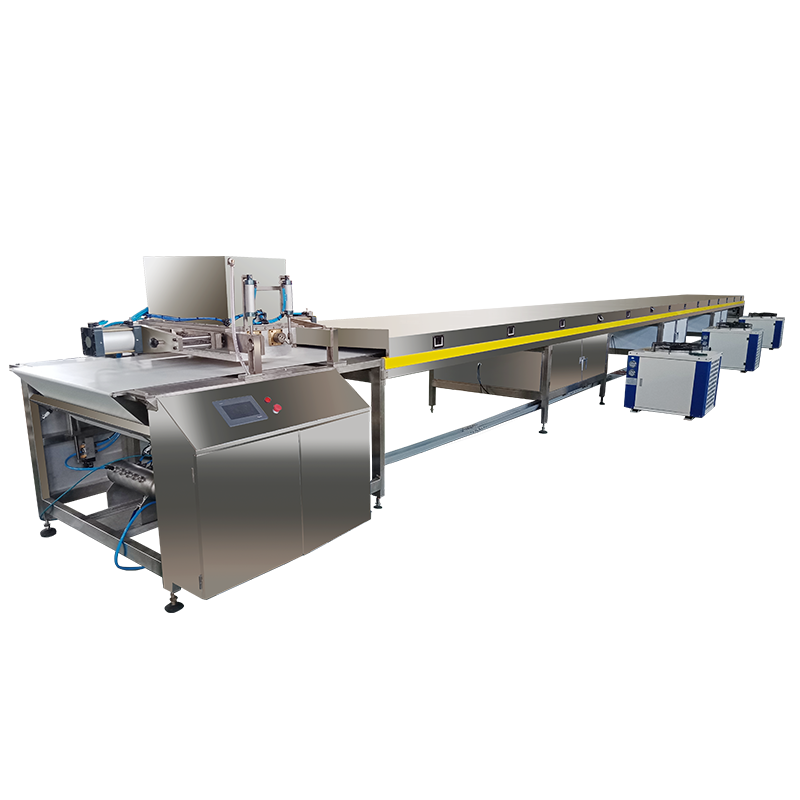
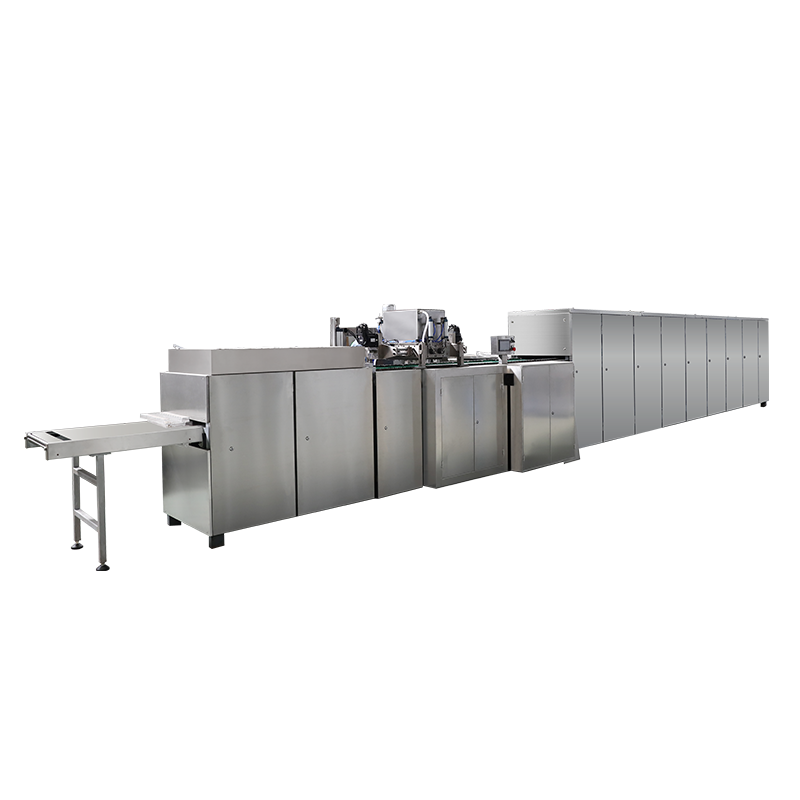 Q110–Q113 Automatic Chocolate Moulding Production LineFully automatic moulding line for bars, blocks, and filled chocolates; review its depositing, cooling, and demolding sections against piece-weight dwell time needs.View Product →
Tempering: the stage that decides gloss, snap and shelf life
Ingredients decide how chocolate tastes; cocoa butter crystallisation decides how it behaves. A temperer takes the mass down until unstable crystals appear, then warms it back so the stable beta form survives. Skip the reheat and the consequences appear within hours as streaks on the surface and a soft bite, followed by fat bloom after a few weeks in transit.
45 to 50 °C → 27 to 28 °C → 31 to 32 °C
melt, cool, reheat
45 to 48 °C → 26 to 27 °C → 29 to 30 °C
melt, cool, reheat
43 to 45 °C → 26 to 27 °C → 28 to 29 °C
melt, cool, reheat
Those targets shift with cocoa butter content and added fats, so use them as commissioning values and verify them against your own recipe.
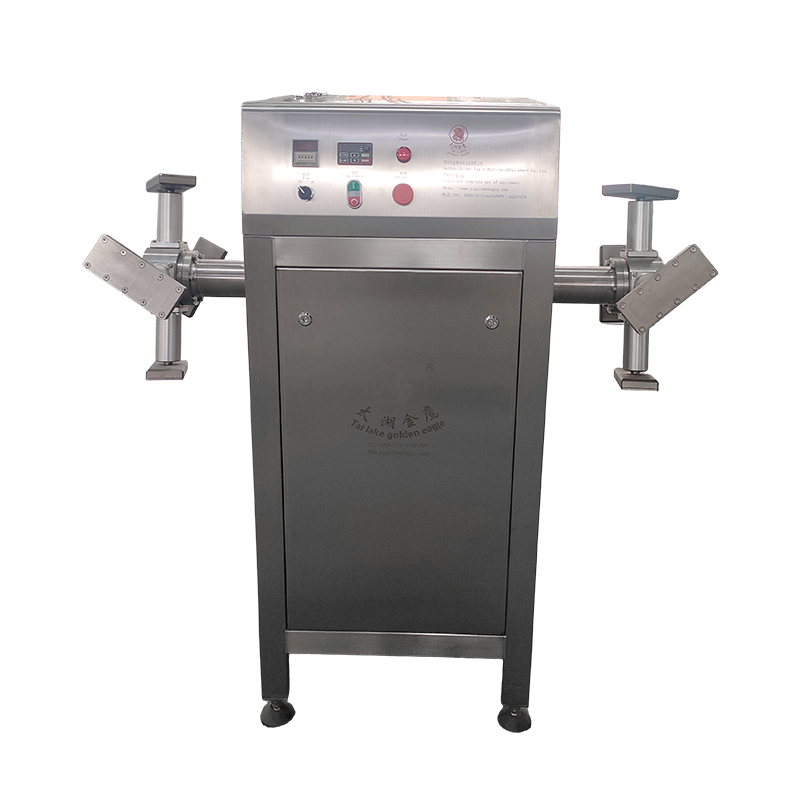
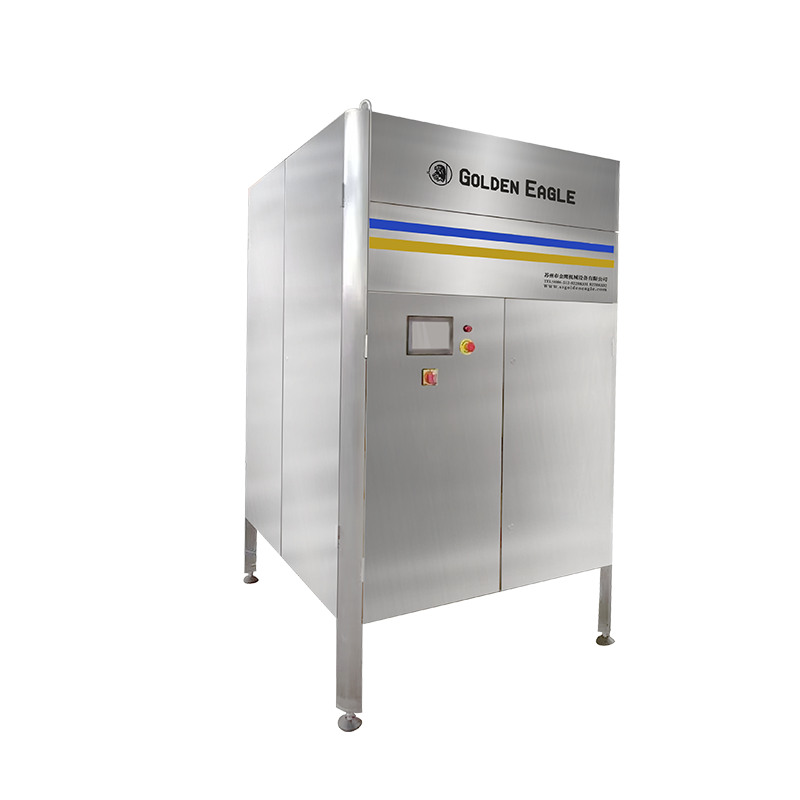 QYJ300 600 1000 Chocolate Tempering MachineVertical continuous tempering unit with four temperature-adjusting zones and one holding zone; compare outlet stability and hourly throughput against your cocoa butter recipe.View Product →
Two numbers matter more than rated capacity: how tightly the machine holds its outlet temperature, and how much throughput it sustains at that tolerance. A unit rated at 1,000 kg/h that drifts ±2 °C costs more in rejects than a 600 kg/h machine holding ±0.5 °C, because a moulding line only runs as fast as its most unstable stage. Check the temper index at the depositor nozzle rather than at the temperer outlet, and repeat that measurement hourly during commissioning.
Depositing: weight tolerance, viscosity and the one-shot decision
The depositor is where the line meets the product, and where most purchase decisions are quietly made.
Three configurations cover nearly everything
- Shell moulding: a measured shot coats the cavity, the mould is inverted to drain, and the centre and base follow in later passes. Suits pralines, hollow figures and filled eggs.
- Solid moulding: one shot fills the cavity completely, with fewer moving parts and simpler changeovers. Best for bars, buttons and coins.
- One-shot: shell and centre are deposited in a single stroke, which cuts cycle time but demands tighter viscosity control and a cleaner release from the mould.
Viscosity is where depositing complaints usually start. A mass that measures comfortably in the holding tank can thicken between the pump and the nozzles, so shot weights drift down through a shift while the operator chases the setpoint. If the weight loss follows a pattern, inspect nozzle heating and pump speed control before blaming the mould. On a site visit, check the features of moulding line depositors that decide day-to-day stability: nozzle temperature control, stroke repeatability, and how quickly the head can be stripped for cleaning.
Cooling and demoulding: follow the curve, not the setpoint
Cooling is a gradient job, not a refrigeration job. The first zone sets the surface, the middle zone pulls heat out of the centre, and the last zone brings the mould back to a temperature where the piece releases without cracking.
Measure the chocolate temperature in the middle of the piece at ejection and log it next to the tunnel setpoints. That single reading tells you whether the profile suits the piece weight, and it usually explains defects the setpoints alone cannot.
What to write into the specification
Vague specifications produce vague quotations, and the gap tends to appear during commissioning rather than at the negotiation table.
| Specification item | Why it changes the result |
|---|---|
| Capacity in kg/h and pieces/min at a stated piece weight | A headline figure alone hides the rate the line holds on a normal shift |
| Mould standard: pitch, cavity count and plate size | Tooling is expensive to change once the line is installed |
| Depositor shots per cycle, shell or one-shot | Sets which products the line can run in a single pass |
| Tempering outlet tolerance in °C at rated throughput | Tempering is usually the tightest constraint on line speed |
| Cooling tunnel zones, dwell time and refrigeration load | Determines cycle time, surface quality and utility cost |
| Demoulding method: pin, twist or robotised | Affects piece quality, labour and the moulds you can use |
| Changeover and cleaning time, CIP provision | A cost that repeats every shift rather than once |
| Certification and electrical standard | Site acceptance and customs clearance depend on it |
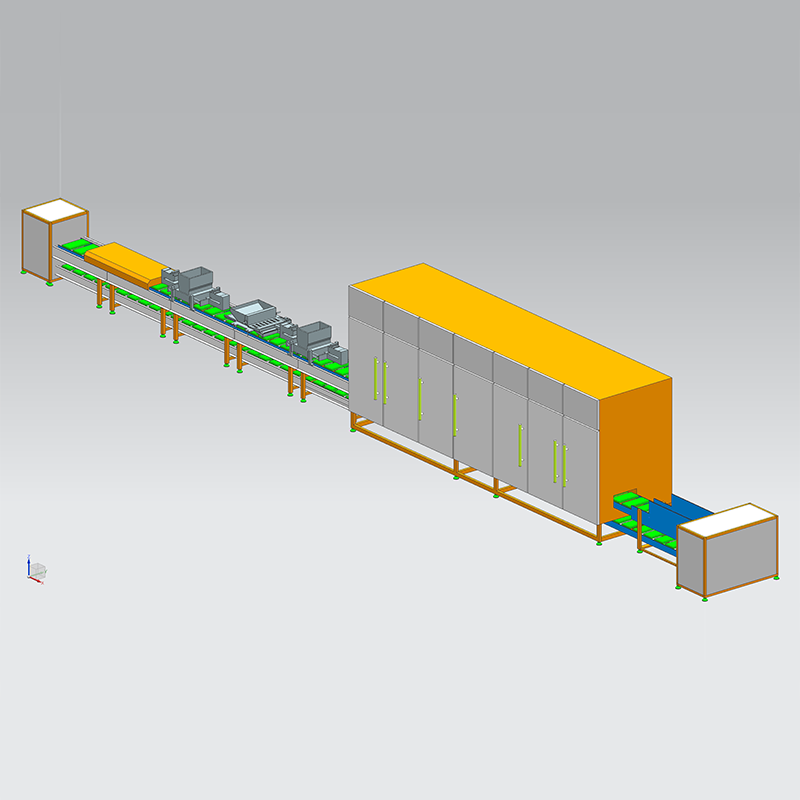
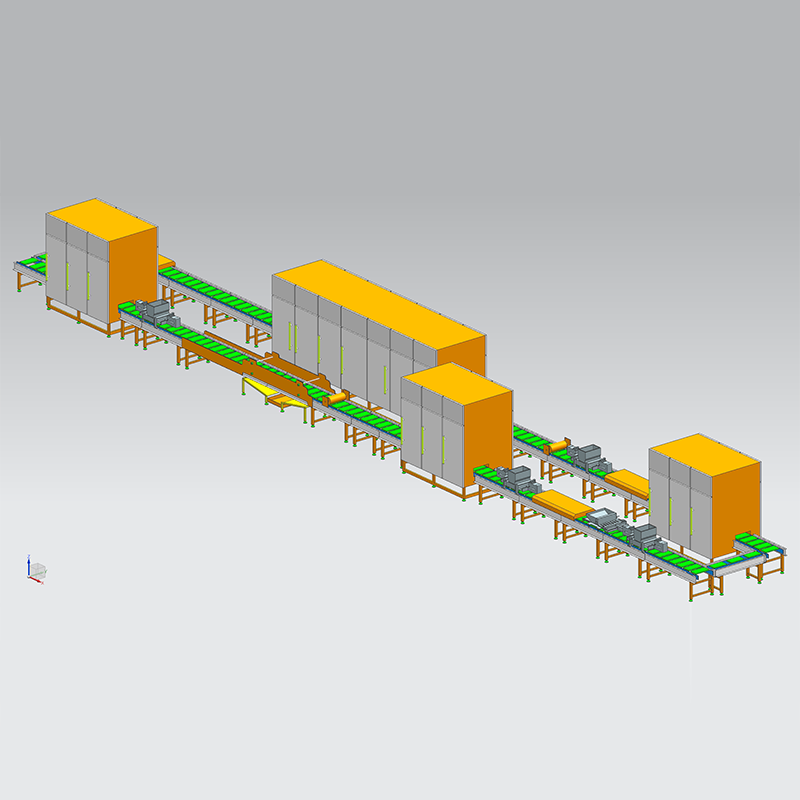
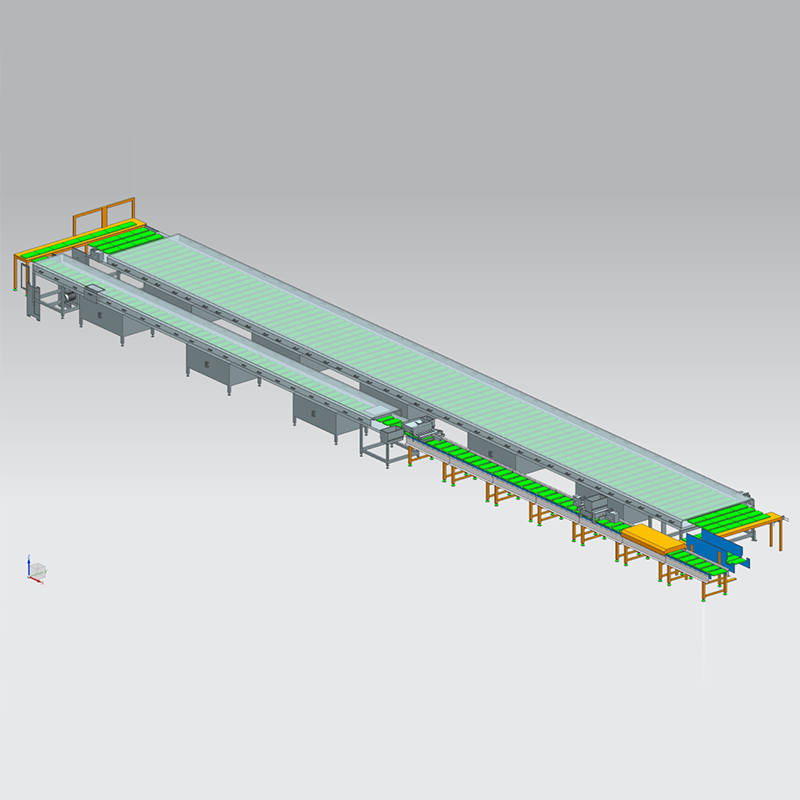 Chocolate Fully Automatic Modular Production LineModular closed-loop system integrating mould preheating, depositing, vertical cooling, demolding, and conveying; request tolerances for output, tempering stability, shot weight, and dwell time.View Product →
Ask for every figure with its tolerance attached: kg/h at a stated piece weight, tempering stability in °C, shot weight deviation in percent, dwell time in minutes. Numbers quoted without tolerances are ceilings, not working values.
Questions buyers ask before ordering a moulding line
Q1: How long does the moulding line process take from depositing to demoulding?
Small moulded pieces commonly spend 4 to 8 minutes in the cooling tunnel, while heavy bars and thick hollow figures can need 12 to 20 minutes. The useful figure is dwell time at your piece weight.
Q2: Can one line run solid bars and filled pralines?
Yes, provided the depositor is built for shell and one-shot work and the mould standard stays consistent. Changeover time between formats is the real constraint, so ask for it in minutes.
Q3: What temper index should the line hold?
Most moulding plants work to a temper index of 4 to 6 on the standard scale, measured at the depositor and checked several times per shift rather than once at start-up.
Q4: Why are moulded pieces dull the next morning?
Usually under-tempering, or a first cooling zone that dropped too steeply and set the surface before the cocoa butter had stabilised.
A moulding line performs at the level of its most unstable stage. If your range covers filled pralines, hollow figures and solid bars, the depositor configuration and the changeover design will matter more than a headline capacity figure, and tempering capacity should always be sized with margin above the depositor.
Where a standard model needs a different mould pitch, a different piece weight, or integration with existing refining and holding equipment, custom line configuration usually costs less than adapting a standard line after installation.