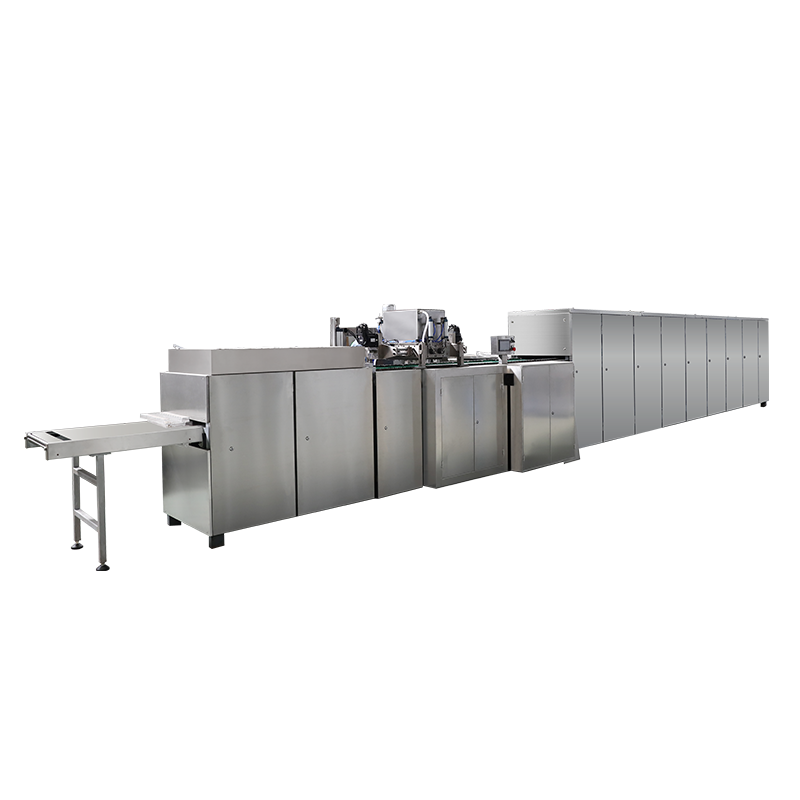


 English
  Français
  عربى
عربى How Holding Tanks, Fat Melters and Pumps Keep a Chocolate Production Line Running Without Losing Temper
Content
- 1 Why Equipment Continuity Matters More Than Any Single Machine
- 2 The Core Equipment Chain Behind Every Tempered Bar
- 3 QBJ Series Chocolate Holding Tank: The Buffer That Protects Temperature Stability
- 4 RYJ Fat Melting Tank: Preparing Cocoa Butter Before It Ever Reaches the Mixer
- 5 DTJ Chocolate Pump: Moving Tempered Mass Without Undoing the Temper
- 6 Where a Chocolate Tempering Machine Fits Into the Larger Line
- 7 Selecting Chocolate Processing Machinery for Different Production Volumes
- 8 Common Integration Mistakes That Undermine Otherwise Good Equipment
- 9 A Simplified View of the Transfer Path
- 10 Maintenance and Sanitation Practices That Preserve Equipment Accuracy
- 11 Frequently Asked Questions
- 11.0.1 Q1: What is the difference between a holding tank and a fat melting tank?
- 11.0.2 Q2: Why does pump selection matter if the tempering machine already did its job correctly?
- 11.0.3 Q3: Can a chocolate fountain machine temper chocolate on its own?
- 11.0.4 Q4: How often should a holding tank be fully emptied and cleaned?
- 11.0.5 Q5: What causes uneven melting in a fat melting tank?
- 11.0.6 Q6: How do I know if my current equipment layout is undersized for my production volume?
Why Equipment Continuity Matters More Than Any Single Machine
A chocolate production line rarely fails because one machine is poorly built. It fails at the gaps between machines, where mass sits too long, cools unevenly, or gets pushed through a pipe fast enough to shear apart the crystal structure a tempering stage just spent minutes creating. Anyone who has walked a mid-size confectionery plant knows the pattern: the tempering curve looks perfect on the readout, yet the finished bars still bloom on the shelf three weeks later. The cause is almost never the temper itself. It is what happened to the chocolate after it left the tempering machine and before it reached the mold.
This is where holding tanks, fat melting tanks and transfer pumps earn their place in the line. They are the connective tissue of a chocolate processing machinery layout, and their job is unglamorous but unforgiving: keep the mass at the right temperature, keep it moving at the right rate, and disturb the crystal lattice as little as possible while doing so.
The Core Equipment Chain Behind Every Tempered Bar
Before looking at each machine individually, it helps to see where it sits relative to the others. The table below lays out the typical sequence found in a chocolate processing line, from raw fat preparation through to the point where tempered mass reaches a mold, enrober or a display chocolate fountain machine for retail service.
| Stage | Typical Equipment | Primary Role | Failure Risk If Skipped |
|---|---|---|---|
| Fat preparation | RYJ Fat Melting Tank | Melts cocoa butter or compound fat into a uniform liquid | Undissolved fat crystals carry through the whole batch |
| Mass storage | QBJ Series Chocolate Holding Tank | Buffers volume between mixing and tempering, holds mass at a stable pre-temper temperature | Temperature drift causes uneven tempering downstream |
| Tempering | Continuous or batch chocolate tempering machine | Builds a controlled ratio of stable cocoa butter crystals | Chocolate sets dull, soft, or with visible streaking |
| Transfer | DTJ Chocolate Pump | Moves tempered mass to molds, enrobers or fountains without shear damage | Excess shear breaks crystal seeds, forcing re-tempering |
| Molding or enrobing | Depositor, enrober, or fountain unit | Shapes and coats the final product | Poor flow control leads to weight variance and surface defects |
Every stage in this chain depends on the one before it holding its temperature and consistency. A well-specified industrial chocolate tempering machine can still produce inconsistent output if the tank feeding it delivers mass at fluctuating temperatures, or if the pump moving the finished product agitates it too aggressively on the way to the mold.
QBJ Series Chocolate Holding Tank: The Buffer That Protects Temperature Stability
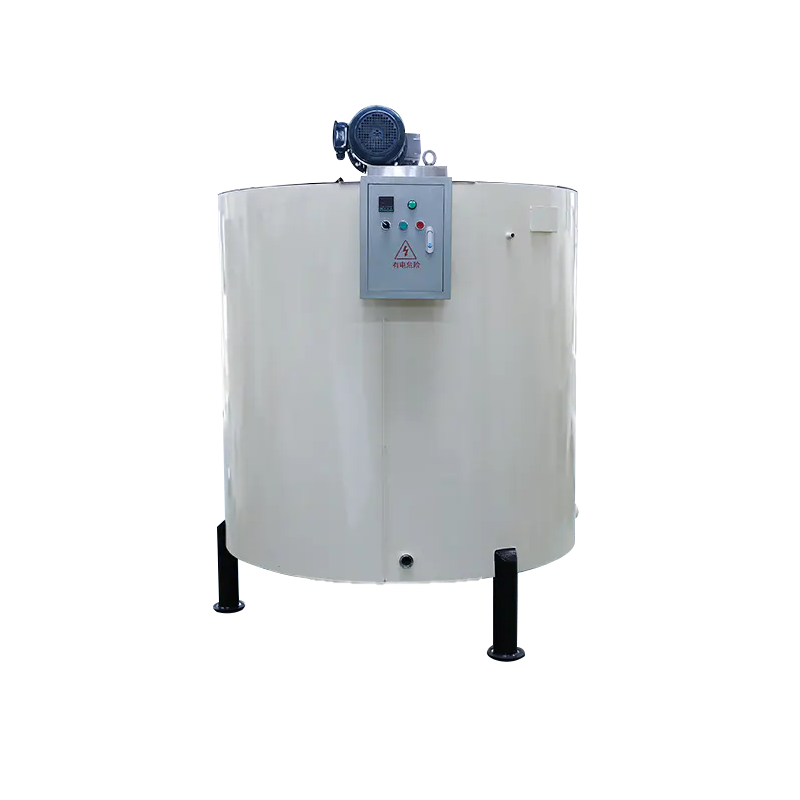
A holding tank looks simple from the outside: a jacketed vessel with an agitator and a temperature controller. In practice it performs three jobs at once. It stores mass produced faster than the tempering stage can consume it, it keeps that mass in a narrow temperature band so the tempering machine receives consistent input, and it prevents settling of cocoa solids and sugar particles through continuous low-speed agitation.
Typical Specifications Seen in Mid-Size Operations
- Holding capacities generally range from 300 liters for pilot lines up to 3,000 liters or more for continuous production
- Water or oil jacketing to maintain mass in the 40 to 45 degree range before tempering
- Low-shear scraped-surface agitators that prevent scorching along the tank wall
- Bottom-mounted or side-mounted outlets connected directly to transfer pumps
Why Undersizing a Holding Tank Causes Downstream Problems
When a holding tank is undersized relative to batch output, operators end up cycling it empty and full repeatedly. Each refill introduces a slug of fresh, warmer mass into chocolate that was already stabilizing at temper temperature. The tempering machine then receives an inconsistent feed, and the finished product shows visible variation from one run to the next, even though nothing on the tempering unit itself has changed.
RYJ Fat Melting Tank: Preparing Cocoa Butter Before It Ever Reaches the Mixer
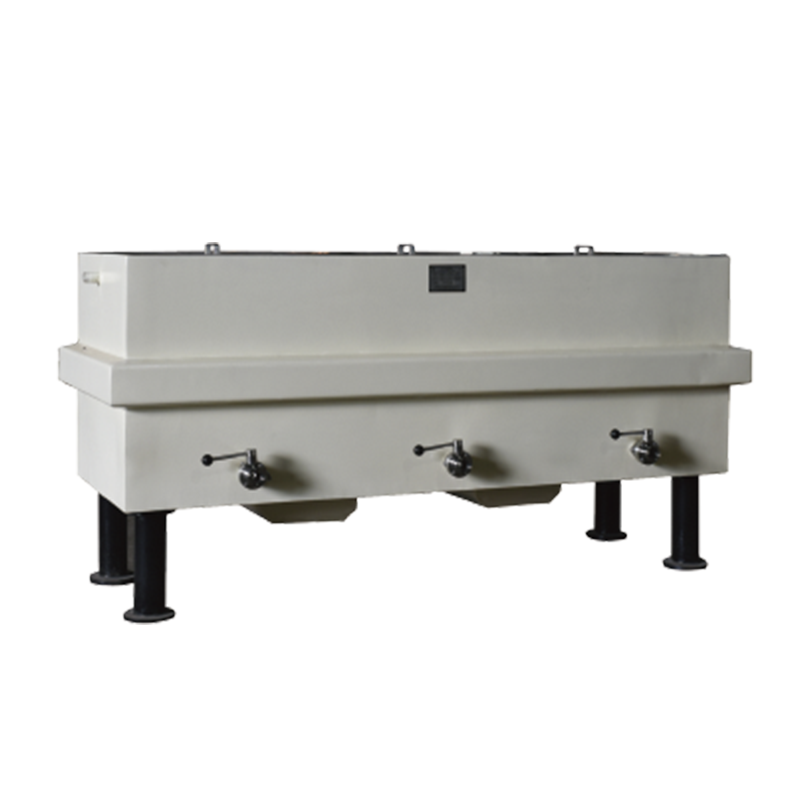
Cocoa butter and many compound fats arrive at a plant in solid blocks or flakes. Before they can enter a recipe, they need to be melted evenly, without scorching, and without holding at high heat long enough to degrade flavor compounds. That is the specific job of a fat melting tank, and it is a separate machine from a holding tank because the temperature and agitation requirements are different.
| Parameter | Typical Range | Reason |
|---|---|---|
| Melting temperature | 45 to 55 degrees | High enough to fully liquefy fat crystals, low enough to avoid oxidation |
| Heating method | Indirect jacket, water or steam | Prevents direct-flame hot spots that scorch fat |
| Agitation speed | Low to moderate | Even heat distribution without incorporating air |
| Batch cycle | Depends on volume and jacket surface area | Larger tanks need proportionally longer melt cycles |
A common oversight in smaller facilities is using a single multipurpose tank for both fat melting and mass holding. This works at low volumes, but as throughput increases it becomes a bottleneck, because the tank can only be doing one job at a time. Separating the two functions, with a dedicated RYJ Fat Melting Tank feeding into a holding tank, lets fat preparation run continuously while the holding tank supplies the tempering stage without interruption.
DTJ Chocolate Pump: Moving Tempered Mass Without Undoing the Temper
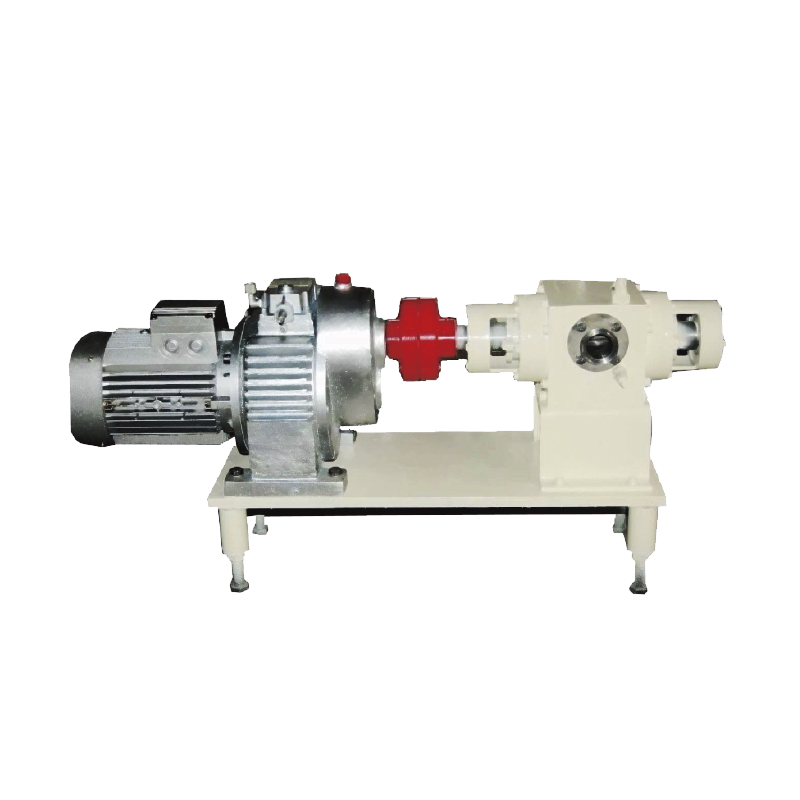
Tempering builds a specific population of stable cocoa butter crystals in a narrow window of time and temperature. Once that structure exists, mechanical stress can break it apart before it ever reaches a mold. This is why the pump used after tempering matters as much as the tempering machine itself.
What Separates a Chocolate-Grade Pump From a Generic Fluid Pump
- Positive displacement design that moves mass at a controlled, steady rate rather than through high-velocity impellers
- Jacketed housing to hold the pump body at temper temperature, preventing localized cooling that could seed unwanted crystals inside the pump
- Wide internal clearances that minimize shear compared to pumps designed for thinner liquids
- Sanitary, easily disassembled construction for cleaning between product runs
A DTJ Chocolate Pump sitting between a tempering machine and a depositor is doing quiet but critical work: keeping flow rate consistent enough that deposit weights stay within tolerance, while keeping shear low enough that the temper survives the trip.
Where a Chocolate Tempering Machine Fits Into the Larger Line
A chocolate tempering machine is the stage that actually creates the crystal structure everything downstream depends on. The process generally moves the mass through three qualitative phases rather than a single temperature step: an initial cooling phase that encourages several crystal forms to develop, a controlled reheating phase that melts away the less stable forms, and a final holding phase that leaves only the stable form intact. Continuous tempering machines automate this curve for high-volume lines, while batch tempering machines suit smaller or more varied production runs.
Industrial Versus Small-Format Tempering Equipment
Not every application needs a full continuous line. A commercial chocolate tempering machine sized for a bakery or confectionery workshop might handle 15 to 50 kilograms per batch, while a industrial chocolate tempering machine feeding an enrobing line can process several hundred kilograms per hour. Even a countertop chocolate fountain machine used for event catering relies on the same underlying principle at a much smaller scale: it needs chocolate that has already been tempered or specially formulated to remain fluid and glossy while it circulates, since a fountain unit itself is not designed to build temper from raw mass.
Selecting Chocolate Processing Machinery for Different Production Volumes
Choosing tank sizes, melting capacity, and pump specifications should start from actual daily throughput rather than the machine specifications alone. The following approach is a practical way to size a line:
- Calculate the maximum kilograms of finished product needed per shift, then work backward to raw mass volume including expected waste and rework
- Size the fat melting tank to complete a full melt cycle within one production shift, with margin for cleaning time
- Size the holding tank to buffer at least one tempering cycle of volume, so tempering never runs dry while the melting tank is still working
- Match pump flow rate to the depositor or enrober intake rate, not to the tank outlet capacity, since the slowest downstream stage sets the pace for the whole line
- Confirm that jacket temperature control across tank, pump, and connecting pipework is consistent, since a single cold spot anywhere in the transfer path can seed unwanted crystals
Quick Reference by Facility Scale
| Facility Type | Approx. Daily Output | Holding Tank Range | Pump Type |
|---|---|---|---|
| Artisan or bakery workshop | Under 200 kg | 100 to 500 liters | Small positive displacement, manual control |
| Mid-size confectionery plant | 200 to 2,000 kg | 500 to 1,500 liters | Jacketed positive displacement, automated flow control |
| High-volume industrial line | Over 2,000 kg | 1,500 to 3,000 liters or multiple tanks | Multiple synchronized pumps feeding parallel depositors |
Common Integration Mistakes That Undermine Otherwise Good Equipment
Most temper-related quality complaints trace back to a handful of recurring issues in how equipment is connected rather than the machines themselves:
- Uninsulated or unjacketed pipe runs between the holding tank and the tempering machine, allowing localized cooling
- Pump speed set higher than necessary, introducing shear that fractures stable crystals right after tempering
- Holding tanks left partially empty for long periods, allowing a temperature gradient to form between the surface and the tank wall
- Melting tanks operated above the recommended range to speed up cycle time, which risks fat degradation and off-flavors
- Cleaning schedules that do not account for fat residue building up in pump clearances, gradually reducing flow accuracy
- Mixing fat batches of different origins in the same melting cycle without accounting for differing melt points
A Simplified View of the Transfer Path
The diagram below outlines a typical sequence from fat preparation through to a finished, molded product, showing where each piece of equipment sits relative to the others.
Maintenance and Sanitation Practices That Preserve Equipment Accuracy
Chocolate processing machinery does not fail suddenly in most cases; it drifts. A pump that once delivered accurate flow rates gradually delivers slightly less as internal clearances wear or as residue builds up. A holding tank that once maintained tight temperature control drifts as jacket scale reduces heat transfer efficiency. Regular maintenance intervals catch this drift before it shows up as a product defect.
| Component | Recommended Check | Frequency |
|---|---|---|
| Holding tank jacket | Verify actual mass temperature against controller reading | Weekly |
| Melting tank agitator | Inspect for wear and confirm even melt distribution | Monthly |
| Transfer pump seals | Check for leakage and internal clearance wear | Monthly |
| Piping and jacketed lines | Confirm no cold spots using surface temperature checks | Weekly |
| Full system clean-in-place cycle | Flush residual fat and sugar buildup | Per product changeover or daily |
Frequently Asked Questions
Q1: What is the difference between a holding tank and a fat melting tank?
A holding tank stores finished chocolate mass at a stable pre-temper temperature and buffers volume between production stages. A fat melting tank has a separate purpose: it liquefies solid cocoa butter or compound fat at a higher temperature before that fat is incorporated into a recipe. Using one tank for both jobs works only at low production volumes.
Q2: Why does pump selection matter if the tempering machine already did its job correctly?
Tempered chocolate carries a delicate population of crystal seeds. A pump with high shear or inconsistent flow can physically break that structure apart during transfer, forcing operators to re-temper the mass or accept a lower-quality finish, even though the tempering step itself was performed correctly.
Q3: Can a chocolate fountain machine temper chocolate on its own?
Generally no. A chocolate fountain machine is designed to keep already-fluid chocolate circulating at a consistent, glossy flow for display or serving purposes. It is not built to run a full tempering curve, so the chocolate used in a fountain is typically pre-tempered or specially formulated to stay fluid without a full temper cycle.
Q4: How often should a holding tank be fully emptied and cleaned?
This depends on production schedule and product changeovers, but most facilities run a full clean-in-place cycle at least daily, and always between different chocolate types or allergen profiles, to prevent cross-contamination and residue buildup that can affect temperature control over time.
Q5: What causes uneven melting in a fat melting tank?
Uneven melting is usually caused by insufficient agitation, uneven jacket heating across the tank surface, or overloading the tank beyond its rated capacity so the outer layers melt before the center. Matching batch size to the tank's rated melting capacity resolves most of these cases.
Q6: How do I know if my current equipment layout is undersized for my production volume?
Common signs include the tempering machine running out of feed between batches, frequent temperature fluctuations in the holding tank as it cycles empty and full, or the transfer pump needing to run at unusually high speed to keep pace with downstream molding or enrobing equipment.