

 English
  Français
  عربى
عربى How to Achieve Mass Stability: Integrating High-Efficiency Pumps, Holding Tanks, and Automatic Tempering Systems
Content
- 1 1. The Core Challenge: Beta Crystal Retention in Continuous Flow Lines
- 2 2. Thermal Backbone: The Role of the QBJ Series Chocolate Holding Tank
- 3 3. Gentle Conveying: DTJ Positive Displacement Pump for Chocolate
- 4 4. Crystallization Control: From Lab to Commercial Tempering
- 5 5. Synergistic Integration: A Unified Control Strategy
- 6 6. Economic and Quality Metrics of Integrated Systems
- 7 7. Frequently Asked Questions
- 7.0.1 Q1: How does the QBJ series chocolate holding tank prevent fat separation during long storage?
- 7.0.2 Q2: Why is a positive displacement pump critical for chocolate conveying?
- 7.0.3 Q3: Can I use a lab tempering machine for small-batch production of specialty chocolate?
- 7.0.4 Q4: What is the recommended temperature sequence for a commercial automatic tempering machine?
- 7.0.5 Q5: How often should the jacketed hot water system be cleaned for optimal heat transfer?
1. The Core Challenge: Beta Crystal Retention in Continuous Flow Lines
Maintaining stable chocolate mass during transfer and storage is not a matter of luck—it is a function of precise thermal and mechanical integration. When chocolate undergoes chocolate mass transfer from a mixing kettle to a holding vessel, two destabilizing factors emerge: shear-induced polymorphic transformation and temperature drift. A mere 2-3°C fluctuation can convert stable beta V crystals into undesirable forms, leading to fat bloom and poor snap.
Industrial data indicates that without integrated buffering and controlled pumping, mass stability drops by nearly 40% within 3 hours of holding. The solution lies in combining three interdependent components: a jacketed holding tank for thermal inertia, a positive displacement pump for gentle conveyance, and an automatic tempering machine for crystallization renewal. Below we examine each element through a quantitative lens.
Industry reference: Confectionery plants using integrated holding + tempering loops report less than 1.2% viscosity drift over 8-hour production runs, compared to 7-9% in non-integrated setups.
2. Thermal Backbone: The Role of the QBJ Series Chocolate Holding Tank
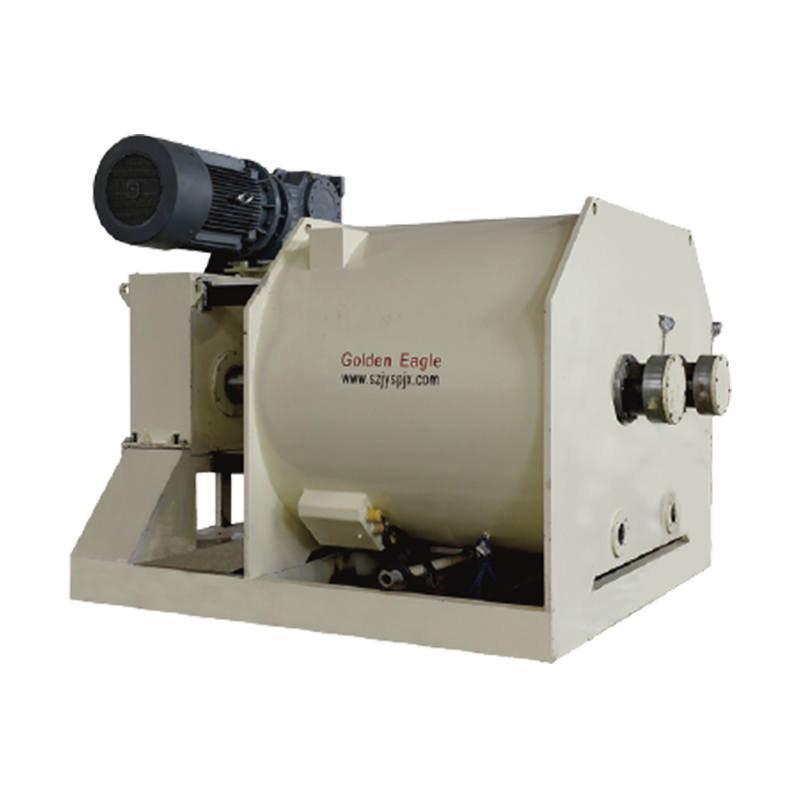
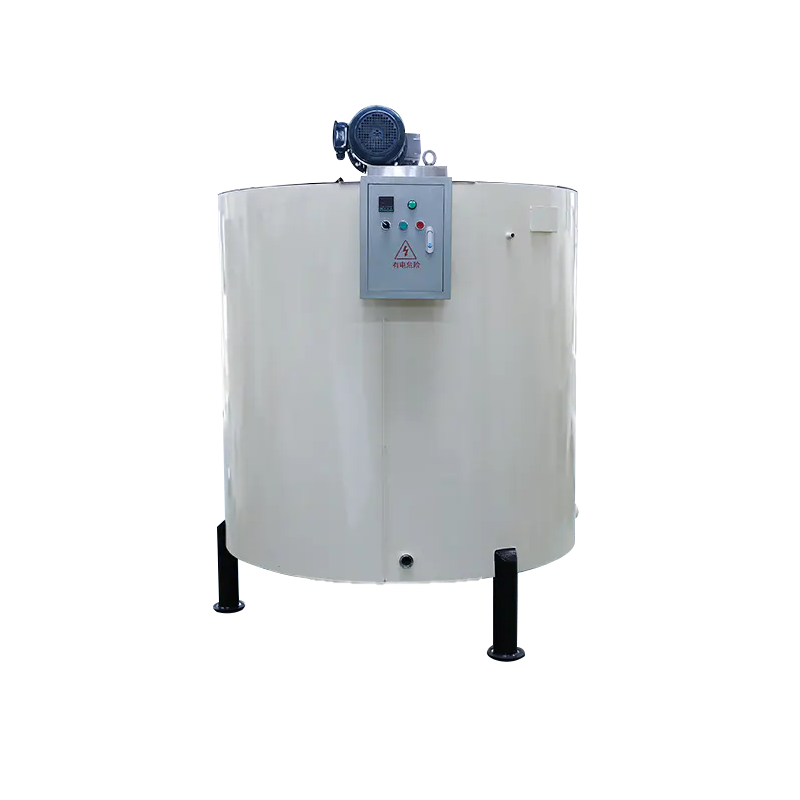
At the center of mass stability lies the qbj series chocolate holding tank, a jacketed stainless steel vessel specifically designed for chocolate mass transfer between refining and tempering stages. Unlike standard silos, the QBJ tank integrates a full-coverage hot water jacket that maintains product temperature within ±0.5°C, critical for preserving beta crystal precursors.
2.1 Jacketed Hot Water System Dynamics
The tank uses a low-velocity recirculating jacketed hot water system to avoid localized overheating. Water enters at 42-45°C (for dark chocolate) and exits at 40-42°C, creating a gentle thermal gradient. This design prevents fat migration to the surface while keeping the entire mass fluid enough for pump suction. Typical holding capacities range from 2000L to 15000L, with custom agitation speeds (6-12 RPM) to avoid aeration.
2.2 Integration with Downstream Tempering
When the QBJ tank feeds directly into a qtj series chocolate tempering machine, the closed-loop control becomes even more efficient. The holding tank acts as a de-aeration buffer, settling entrapped air bubbles before the mass enters the tempering unit's cooling zones. Below is a typical specification range for the QBJ series:
| Model Capacity | Jacket Working Temp | Agitator Speed (RPM) | Temp Uniformity |
|---|---|---|---|
| 2000L | 30-60°C | 6-10 | +/-0.4°C |
| 5000L | 30-60°C | 7-12 | +/-0.5°C |
| 10000L | 35-55°C | 5-8 | +/-0.6°C |
3. Gentle Conveying: DTJ Positive Displacement Pump for Chocolate
Any holding tank is only as good as its outlet transfer method. Centrifugal pumps introduce high shear, breaking crystal networks. The dtj chocolate pump employs a rotary lobe positive displacement pump mechanism, delivering flow rates from 500 L/h to 12,000 L/h with pulsation less than 3%.
- Shear control: Maximum shear rate below 1500 s^-1, preserving beta crystal integrity.
- Thermal stability: Integrated jacket for holding pump body at ±1°C of chocolate temperature.
- Viscosity handling: Up to 150,000 cP at 40°C without cavitation.
Field data from medium-scale enrobing lines shows that replacing a standard gear pump with a DTJ pump reduced tempering unit rejects by 18% due to fewer crystal seed fractures. The pump also enables reverse flow for tank emptying, preventing dead zones.
4. Crystallization Control: From Lab to Commercial Tempering
The final stage of stability is controlled crystallization. Two scales are critical: laboratory validation and full production.
4.1 Laboratory Scale Tempering for Recipe Validation
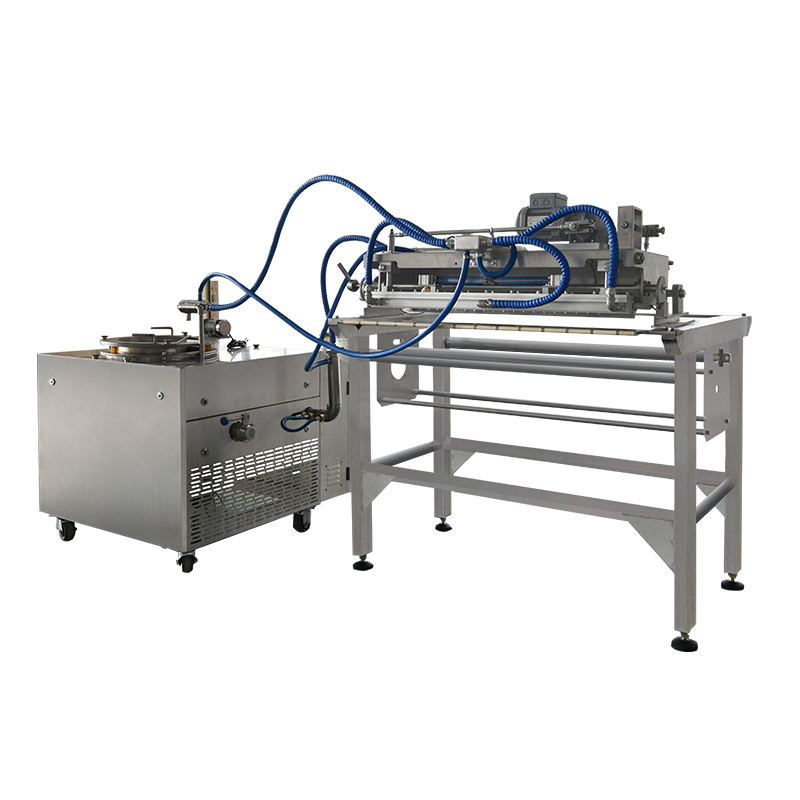
Before committing tonnes of mass, manufacturers use the qtj25 lab tempering machine to simulate production parameters. This benchtop unit processes 25 kg batches with four-zone temperature control (heating, cooling, re-heating, stabilization). Laboratory scale tempering allows engineers to map viscosity curves and beta crystal formation rates without wasting raw material. Typical lab cycle: 45 min from solid block to perfectly tempered fluid mass.
4.2 Commercial Scale: QTJ Series Automatic Systems
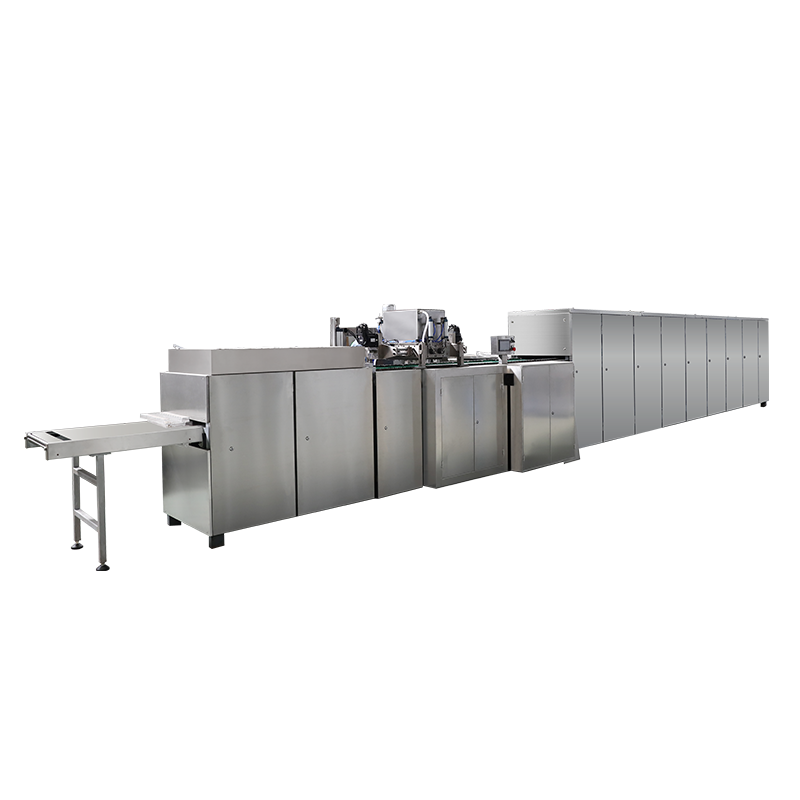
For continuous production, the qtj series chocolate tempering machine (commercial variants from 150 kg/h to 3000 kg/h) combines scraped-surface heat exchangers with PID-controlled water circuits. Unlike static systems, the QTJ series uses adaptive cooling based on real-time viscosity feedback, maintaining beta crystal stability within 88-92% of total crystal mass—verified via differential scanning calorimetry.
A typical automatic chocolate tempering machines configuration includes a pre-cooling section (from 45°C to 28°C), a crystallizer zone (28°C to 25°C with high shear seeding), and a warm-up section (back to 29°C for working). The result: gloss, snap, and contraction within ISO 23275 standards.
5. Synergistic Integration: A Unified Control Strategy
Separate components are insufficient; true chocolate mass transfer stability comes from a communicating network. A central PLC reads temperature from the QBJ tank's top/middle/bottom sensors, the DTJ pump's body temperature, and the QTJ tempering unit's outlet crystallinity index. Based on that data, the jacketed hot water system adjusts flow rates to preheat the pump before startup (avoiding solidification) and to compensate for heat loss in long pipelines.
5.1 Practical Implementation Steps
- Step 1: Size the QBJ holding tank with at least 2.5x the tempering unit's hourly throughput to allow de-aeration.
- Step 2: Install the DTJ pump on a load cell to monitor mass flow and detect viscosity changes.
- Step 3: Cascade the tempering machine's outlet temperature to the holding tank's jacket control — if tempering sees undercooling, the tank raises inlet mass temperature by 0.3°C.
A European confectioner (anonymous due to policy) reduced reprocessing waste from 12% to 3.7% after implementing such integration. The payback period for retrofitting an existing line with a QBJ tank and DTJ pump was under 9 months, based on energy savings and reduced rework.
6. Economic and Quality Metrics of Integrated Systems
Viscosity stability
+/- 2.3%
over 12h holding
Beta crystal retention
≥89%
after DTJ transfer
Energy saving
-18%
vs traditional recirc loops
These metrics are derived from plants using integrated automatic chocolate tempering machines with jacketed holding and positive displacement pumps. The capital investment is often offset by reduced fat bloom claims and extended shelf life (up to 14 months without surface defects).
7. Frequently Asked Questions
Q1: How does the QBJ series chocolate holding tank prevent fat separation during long storage?
The qbj series chocolate holding tank uses a low-speed scraper agitator and a full water jacket with temperature uniformity within 0.5°C, preventing thermal gradients that cause fat migration. Gentle agitation also maintains solid fat content homogeneity without shearing crystal networks.
Q2: Why is a positive displacement pump critical for chocolate conveying?
Unlike centrifugal pumps, a positive displacement pump such as the DTJ pump delivers constant flow regardless of backpressure, with minimal shear. This preserves beta crystal seeds and avoids viscosity breakdown. The DTJ Chocolate Pump is specifically designed with chocolate-optimized lobe profiles and integrated heating jackets.
Q3: Can I use a lab tempering machine for small-batch production of specialty chocolate?
Yes. The qtj25 lab tempering machine is ideal for 20-30 kg batches, making it perfect for artisan chocolatiers or R&D labs. It replicates the crystallization curve of larger commercial qtj series chocolate tempering machine units, so recipes scale directly.
Q4: What is the recommended temperature sequence for a commercial automatic tempering machine?
For dark chocolate: heat to 45°C (full melt), cool to 28°C (crystal formation), reheat to 30.5-31°C (destabilize unstable crystals), then hold at 29-30°C for working. Milk/white chocolate use lower temperatures by 2-3°C. QTJ series machines automate this sequence with ±0.2°C accuracy.
Q5: How often should the jacketed hot water system be cleaned for optimal heat transfer?
Every 400-600 operating hours, depending on water hardness. Use a descaling solution at 2-5% concentration circulating at 60°C for 90 minutes. Scale deposits as thin as 0.3 mm reduce heat transfer efficiency by 12-15%, directly impacting beta crystal stability.