

 English
 Français
 عربى
Chocolate Moulding Line Automation: What It Means, Costs and How to Choose
Content
- 1 What chocolate moulding line automation actually covers
- 2 The measurable benefits of an automated line
- 3 Core modules that decide product quality
- 4 Choosing the right automation level without overpaying
- 5 Throughput and payback expectations
- 6 Quality standards and compliance to verify
- 7 Frequently asked questions
- 7.0.1 Q1: What is the difference between a solid-bar moulding line and a shell moulding line?
- 7.0.2 Q2: How many operators does an automatic chocolate moulding line need?
- 7.0.3 Q3: Can an existing semi-automatic line be upgraded to full automation?
- 7.0.4 Q4: Which chocolate products can be made on an automated moulding line?
A mid-sized chocolate factory rarely decides to move to a fully automatic moulding line because of a single machine failure. More often, the trigger is a combination of small pressures: a packaging line that has to stop while operators finish demolding by hand, a customer who complains about inconsistent tablet weights, or a new contract that requires two additional product formats. The conclusion to draw from those experiences is simple: chocolate moulding line automation is not a single depositor upgrade, but a coordinated system of mold transport, servo-controlled depositing, vibration, multi-zone cooling, demolding and mold return.
This guide explains what automated chocolate moulding lines do, where their measurable benefits come from, and how to choose automation that matches your product range without over-investing. The decisions that matter most are made before the equipment arrives: your mold inventory, recipe families, required output and available cooling.
What chocolate moulding line automation actually covers
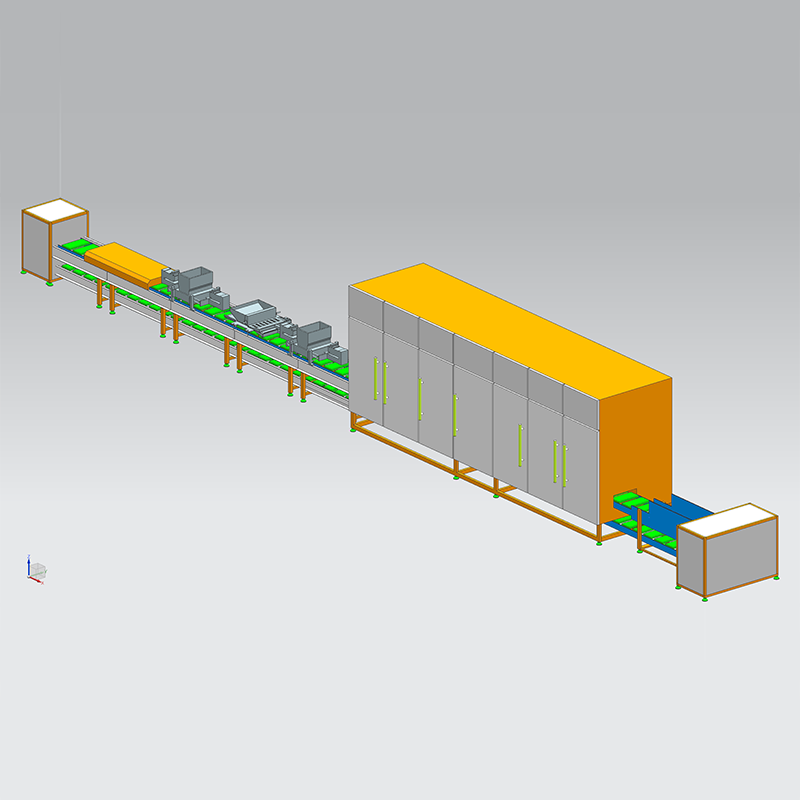
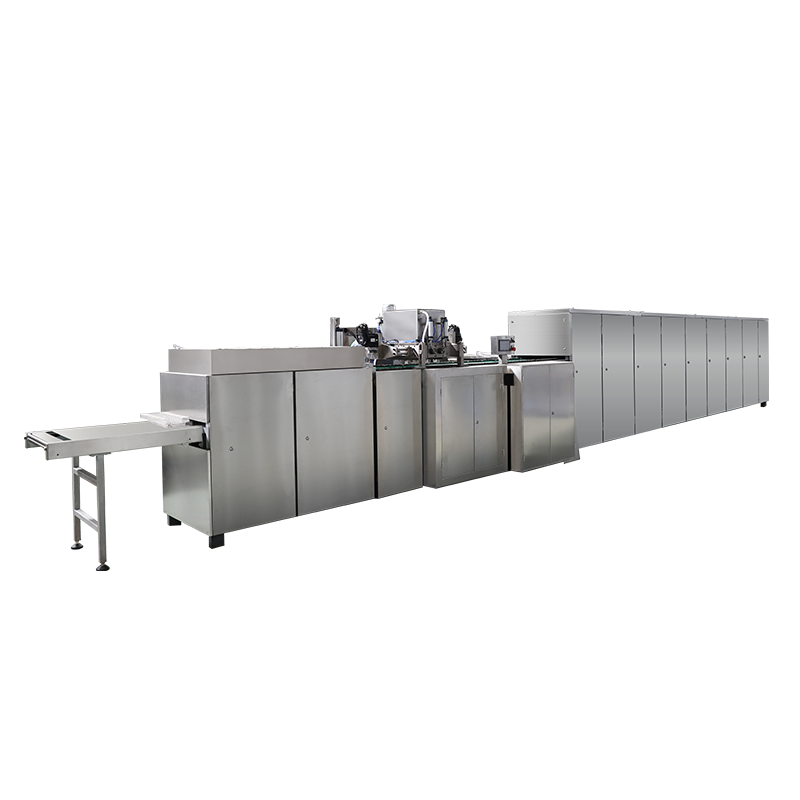
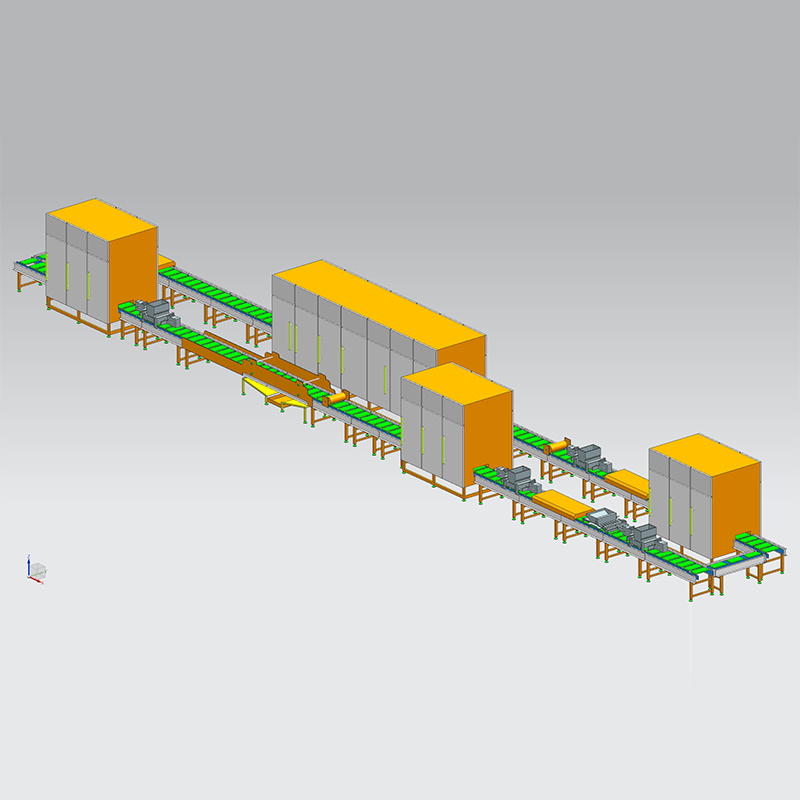
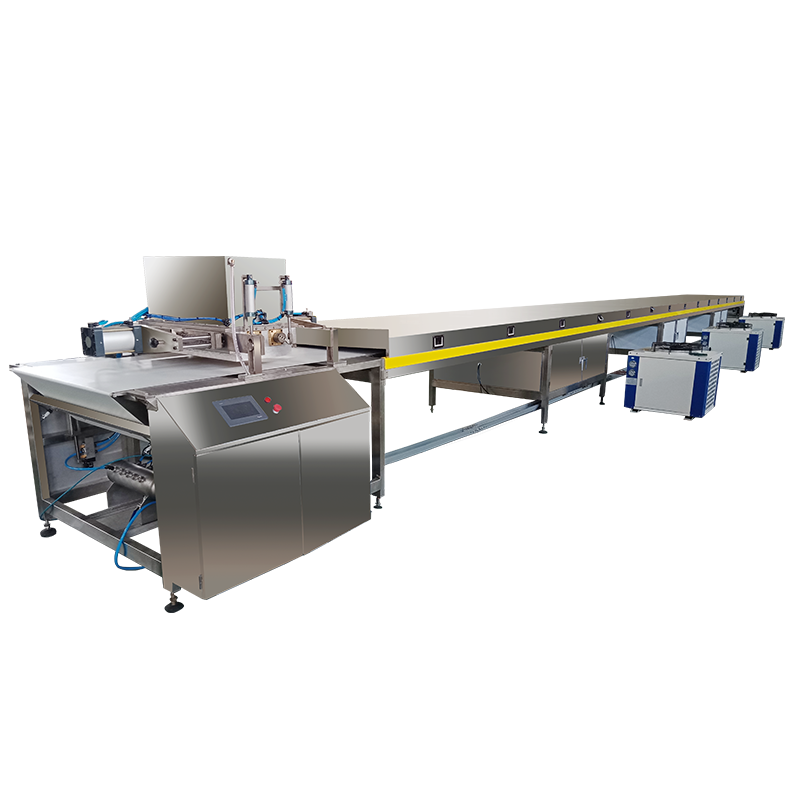
An automated chocolate moulding line is a closed-loop production system. Molds move from a storage and loading device into a pre-heating station, then under a depositor, across a vibration section and into a cooling tunnel. At the end, the line demolds the product automatically and returns the empty molds to the starting point.
The control system is the part that makes the line “automated” rather than merely mechanized. A PLC manages mold tracking, depositor timing, vibration intensity, cooling tunnel temperature and conveyor speed. A touch panel stores recipes so that every product format can recall the same parameters shift after shift.
Typical stations in an automatic moulding line
- Mold loader and automatic mold transport
- Mold pre-heating to avoid dull or uneven product surfaces
- Servo-driven depositor with one or multiple dosing pumps per mold cavity
- Vibration table to settle the mass and release trapped air bubbles
- Multi-zone cooling tunnel with adjustable air temperature and speed
- Demolding station with vibration and mechanical mold tilt or turnover
- Automatic mold return conveyor
For shell-moulded, filled or multi-layer chocolates, the line adds stations for shell forming, filling and backing, each integrated into the same transport sequence. The complexity of these stations, not the main frame, is where the real differences between manufacturers appear.
The measurable benefits of an automated line
Automation changes production economics in four measurable ways: weight consistency, labor use, changeover time and data visibility. These benefits create different value depending on your product, so it is useful to compare manual, semi-automatic and fully automatic lines side by side.
| Comparison point | Manual / indexing | Semi-automatic | Fully automatic |
|---|---|---|---|
| Operators per shift | 4 - 6 | 2 - 3 | 1 - 2 |
| Weight control on solid bars | ±2 - 3 g | ±1 - 2 g | ±0.5 - 1 g |
| Recipe changeover | Manual adjustments | Partially stored settings | Recipe via HMI |
| Production data | Manual records | Basic counters | Full batch history |
Core modules that decide product quality
Every automatic chocolate moulding line is built from the same basic modules, but the quality of results depends on how those modules are engineered and tuned. Four modules deserve close attention when you compare equipment from different suppliers.
Servo-driven depositor
The depositor is the exact point where weight precision is won or lost. Servo-controlled piston pumps dose the same volume of chocolate into every cavity, and the depositing profile can be adjusted to match product viscosity and recipe. A depositor with independent servo pumps also gives you flexibility: you can run solid bars today and one-shot filled products tomorrow without changing the main frame.
Vibration section
Vibration must be strong enough to bring air bubbles to the surface and settle the mass into complex mold details, but gentle enough not to separate cocoa butter from the mass or create surface streaks. The best lines let you adjust amplitude and frequency from the HMI and store them in the recipe.
Multi-zone cooling tunnel
Chocolate needs a controlled cooling curve, not just cold air. A correctly designed tunnel is divided into separate temperature zones, usually starting mild, then cool, then mild again before demolding. Condensation, cold spots and sudden temperature changes cause bloom, dull surfaces and stress cracking. Check the tunnel length against your planned throughput before you commit to a price.
Demolding and mold return
Gentle demolding protects thin edges and surface gloss. Automatic stations use a combination of vibration, mechanical twisting and mold turnover. The mold return conveyor should be sized for the heaviest mold in your inventory, including metal-reinforced frames used for shell-moulded products.
Choosing the right automation level without overpaying
The right automation level is the one that matches your product matrix and changeover frequency. A continuous line with a 25-meter cooling tunnel is unnecessary if you manufacture short runs of specialized molded products. A manual indexing line cannot satisfy a contract that demands consistent weight on two million bars per year.
Consider these questions before requesting a quotation
- Product matrix: solid bars only, or also filled, shell-moulded and multi-layer items?
- Mold plan: how many mold sizes will run on the line, and how long does a mold change take?
- Output target: what is the required capacity in kilograms per hour or molds per minute?
- Facility constraints: available floor length for the cooling tunnel, ceiling height, electrical supply and drainage.
- Maintenance skills: your team must be able to maintain servo drives, pumps and temperature probes; otherwise, remote support becomes a critical buying criterion.
Common mistakes to avoid
- Oversizing the line for a future plan that has not been approved, then paying high energy costs and long cleaning time.
- Underestimating cooling capacity, the most common cause of bottlenecks in chocolate moulding.
- Choosing one-shot machinery when you actually need shell moulding with a separate fill and backing step.
- Ignoring hygiene access, especially around the depositor and cooling tunnel, making daily cleaning time-consuming.
Throughput and payback expectations
Capacity figures in marketing materials look impressive, but your real throughput depends on mold geometry, piece weight, chocolate viscosity and cooling time. The table below shows realistic starting points for three common line configurations.
| Line configuration | Typical output | Best-suited products | Recommended plant |
|---|---|---|---|
| Compact manual indexing line | 50 - 150 kg/h | Solid tablets, test batches | Chocolatiers, pilot plants |
| Semi-automatic with PLC recipes | 150 - 300 kg/h | Solid bars, simple filled items | Mid-size confectionery plants |
| Fully automatic continuous line | 300 - 800 kg/h | Shell-moulded, multi-layer, high volume | Industrial chocolate factories |
For payback calculations, focus on three numbers. First, direct labor: one automatic line typically replaces two to three operators per shift. Second, material yield: a servo depositor with weight control can reduce overfill by 1 to 3 percent, which matters when cocoa butter is your largest material cost. Third, changeover time: stored recipes cut format changeover from a manual re-tuning process of forty minutes or more to a few button presses, followed only by physical mold changes.
Quality standards and compliance to verify
Automation does not replace the need for solid manufacturing and hygiene standards. When you compare suppliers, ask for documented evidence of these points:
- ISO 9001 certification for the equipment manufacturer as a mark of repeatable engineering quality.
- CE certification if the line is intended for the European market.
- Food-contact material documentation for surfaces that touch chocolate, including seals and hoses.
- IP-rated electrical cabinets that can be washed down safely in a food environment.
- Delivery of technical documentation, spare parts lists and a documented commissioning procedure.
Manufacturers with decades of experience in complete chocolate lines, such as Suzhou Golden Eagle Machinery & Equipment Co., Ltd., can provide both ISO 9001 and CE documentation because they have been exporting to Europe, Australia, Russia and Southeast Asia for many years. A line from such a supplier is more than a collection of components: it is a coordinated system where the depositor, tempering machine, holding tanks, pumps and transport conveyors are designed to work together.
Frequently asked questions
Q1: What is the difference between a solid-bar moulding line and a shell moulding line?
A solid-bar line deposits chocolate into a full mold cavity. A shell moulding line first deposits a thinner layer into the mold, tilts the mold to coat the inner surface, cools it, then adds a filling and a backing layer. Shell moulding takes a longer cooling tunnel and more depositing stations, making it a fundamentally more expensive line.
Q2: How many operators does an automatic chocolate moulding line need?
A fully automatic line usually runs with one or two operators per shift who supervise the depositing, check demolding quality and perform cleaning. Small semi-automatic lines typically need two to three. The exact number depends on how many manual steps remain around the line.
Q3: Can an existing semi-automatic line be upgraded to full automation?
Sometimes, yes. Adding a PLC, servo drives, an automatic mold loader and a mold return conveyor can convert an indexing line into a more automated one. However, the cooling tunnel length and the robustness of the main frame may limit the upgrade. Ask the original manufacturer to inspect the line before planning a retrofit.
Q4: Which chocolate products can be made on an automated moulding line?
Solid tablets, molded bars, filled pralines, shell-moulded Easter eggs, seasonal shapes and multi-layer products are all possible. The limitation is not the basic line concept but the number of depositing stations, mold design and cooling time available per product.
Chocolate moulding line automation delivers the most value when it is planned around your actual product mix, not around a generic machine brochure. Start by writing down your molds, product formats, daily output and changeover needs. Compare suppliers on the engineering details of the depositor, cooling tunnel and demolding station. Then choose the line that gives you stable quality today and room to grow without penalties tomorrow.