

 English
  Français
  عربى
عربى How Does Industrial Chocolate Enrobing Equipment Improve Coating Consistency?
Content
- 1 The Role of Enrobing Equipment in Modern Confectionery Lines
- 2 How an Industrial Chocolate Enrober Processes Product
- 3 Core Components That Determine Coating Quality
- 4 Throughput Benchmarks Across Line Configurations
- 5 Temperature Control Precision Over a Production Cycle
- 6 Enrobing Line vs Manual Coating: A Structured Comparison
- 7 Matching Equipment Specifications to Your Product Line
- 8 Maintenance Practices That Extend Service Life
- 9 Product Categories That Benefit Most from Enrobing
- 10 Common Coating Defects and Their Root Causes
- 11 Frequently Asked Questions
- 11.0.1 Q1: What is the difference between an enrober and a dipping machine?
- 11.0.2 Q2: How is coating thickness controlled on an enrobing line?
- 11.0.3 Q3: What causes chocolate bloom on enrobed products?
- 11.0.4 Q4: Can one enrobing line handle multiple product types?
- 11.0.5 Q5: How long does a cooling tunnel need to be?
The Role of Enrobing Equipment in Modern Confectionery Lines
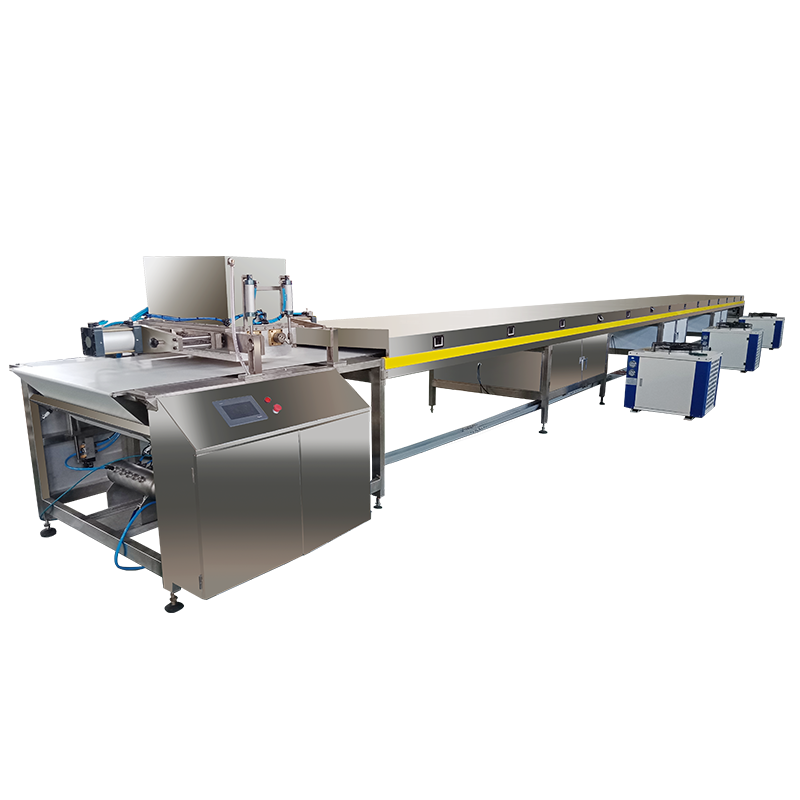
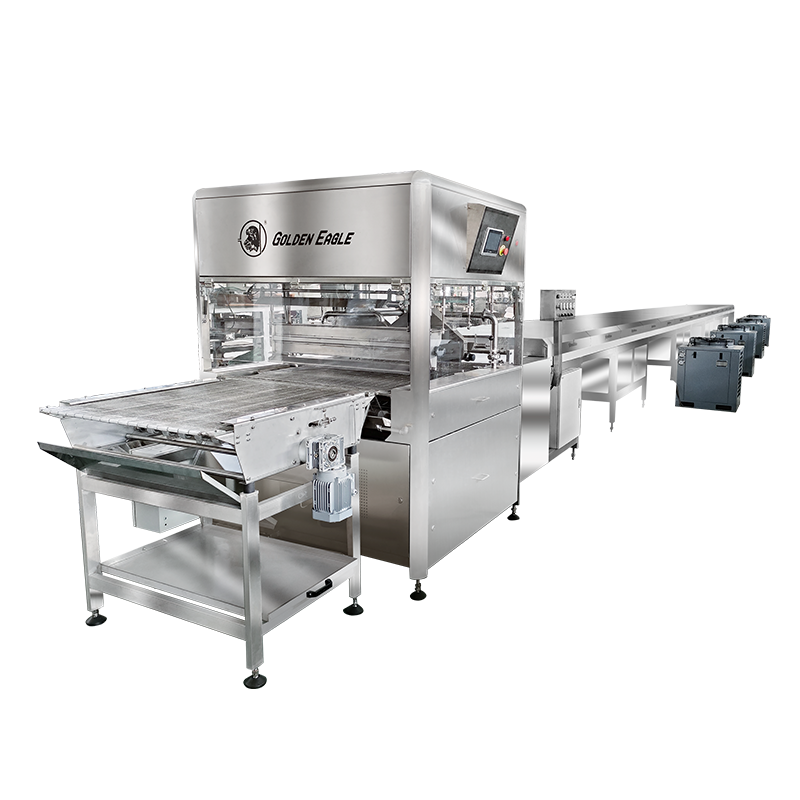
Consistent chocolate coverage is one of the hardest problems in confectionery manufacturing. A biscuit, wafer, nut cluster, or candy center that passes through a bath by hand will pick up uneven layers, air pockets, and drip marks that show up immediately on a retail shelf. This is the exact problem that a chocolate enrobing line is engineered to solve. Rather than dipping products individually, an enrober carries items on a moving mesh belt through a curtain of tempered chocolate, applies a controlled bottom layer, and then removes excess coating with calibrated air knives before the product enters a cooling tunnel.
Product spacing on the infeed belt, curtain flow rate, and air knife pressure all interact with one another, which is why a facility that simply buys the largest available machine without matching these settings to its actual product often ends up with worse consistency than a smaller, correctly specified line.
For plant managers evaluating new coating capacity, the decision is rarely about whether to automate, but which configuration of enrobing equipment fits the product mix, throughput target, and floor layout already in place. This article breaks down how enrobing equipment functions mechanically, what performance data typically looks like across different scales of operation, and how to compare automated coating against manual or semi-automated methods using measurable criteria rather than marketing claims. It also covers the defect patterns that show up most often when a line is misconfigured, along with the maintenance habits that keep a system running within tolerance over years of continuous operation rather than months.
Confectionery, bakery, and snack producers approach this equipment from different starting points. A bakery adding a coating step to an existing wafer or cookie line is usually retrofitting an enrober into a fixed floor length, while a confectionery producer building a new facility has more freedom to size the cooling tunnel and reservoir around long term volume targets. Both groups benefit from working through the same set of mechanical fundamentals before comparing specific models.
How an Industrial Chocolate Enrober Processes Product
At a functional level, enrobing equipment performs four distinct operations in sequence, and each stage has its own tolerance requirements. Understanding this sequence matters because a bottleneck or misalignment at any single stage will show up as a defect three steps later, often making the root cause difficult to trace on the finished product.
The infeed stage places product onto a wire mesh belt at a fixed spacing, which is critical because uneven spacing later causes chocolate to bridge between items or leave gaps in coverage. A pre-bottomer, where fitted, applies a thin base layer so the product does not stick to the mesh and so the final coat has a clean, sealed underside rather than a mesh-textured pattern. The main enrobing head then drops a continuous curtain of tempered chocolate over the moving product, fully submerging the top and sides. Air knives positioned immediately after the curtain remove excess chocolate by directing calibrated air pressure across the belt width, which is what determines final coating weight and evenness far more than the curtain itself. Finally, the coated product travels through a multi-zone cooling tunnel where temperature is stepped down gradually to lock in gloss and snap without causing bloom.
Core Components That Determine Coating Quality
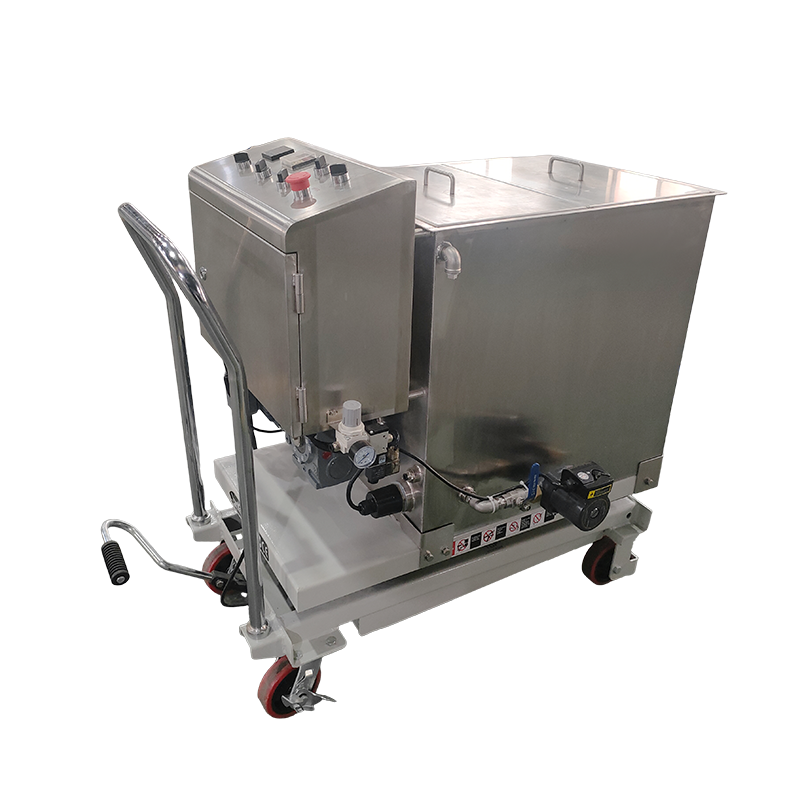
Every SJP Series Chocolate Enrobing Line and comparable industrial systems share a common set of subsystems, but the build quality and control precision of each subsystem is what separates a line that holds tight tolerances from one that drifts within a single shift.
| Component | Primary Function | Typical Tolerance Impact |
|---|---|---|
| Tempering unit | Maintains crystal structure of the chocolate mass | Plus or minus 0.5 degrees stability |
| Curtain head | Delivers even coating flow across belt width | Cross-belt weight variance under 3 percent |
| Air knife assembly | Trims excess coating to target thickness | Coating weight adjustable in small increments |
| Mesh belt drive | Transports product at a constant, synchronized speed | Speed variance under 1 percent |
| Cooling tunnel | Sets coating without inducing fat bloom | Multi-zone gradient control |
| Bottom recirculation pump | Returns excess chocolate to the reservoir | Prevents pooling and viscosity drift |
The tempering unit deserves particular attention because it is the single component most responsible for finished product appearance. Chocolate that is under-tempered sets with a dull, streaky surface and is prone to bloom within days of packaging, while over-tempered chocolate can set too quickly inside the enrober itself, clogging the curtain head. Systems with closed-loop temperature feedback across the melting, tempering, and holding tanks maintain a narrower operating band than systems relying on manual thermostat checks.
Throughput Benchmarks Across Line Configurations
Line capacity is usually specified by belt width and belt speed, but the number that matters operationally is coated output per hour, since that is what determines whether the enrober keeps pace with an upstream depositor or baking line. The chart below reflects commonly cited throughput ranges across four typical belt width classes used in confectionery and bakery coating applications.
These figures shift depending on product density, target coating weight, and whether the line runs a pre-bottomer pass, so they should be treated as planning ranges rather than guaranteed figures for any specific product. A facility coating a light wafer will sit toward the upper end of a range, while a dense nut cluster with a heavier target coat weight will run slower on the same equipment.
Temperature Control Precision Over a Production Cycle
One of the more overlooked performance indicators is how tightly a line holds chocolate temperature as it runs continuously over an eight-hour shift. Wide temperature swings during long runs are a common source of intermittent gloss and bloom problems that are difficult to diagnose because they do not appear on every batch.
Closed-loop systems that continuously sample bath temperature and adjust heating elements in small increments hold a much narrower band than lines relying on periodic manual checks. This matters most on longer runs, since a line that drifts by even a degree and a half over several hours can shift a product from properly tempered to noticeably under-tempered without any single obvious trigger point.
Operational note: Temperature logs pulled from the tempering unit and the enrobing bath separately are more useful for troubleshooting than a single combined reading, since the two zones can drift independently when a recirculation pump is undersized for the tank volume.
Enrobing Line vs Manual Coating: A Structured Comparison
Manufacturers moving from hand-dipping or small batch tanks to a continuous line are usually weighing five practical factors rather than a single cost figure. The radar comparison below scores automated enrobing equipment against manual coating on a relative scale, based on commonly reported operational outcomes.
The pattern that shows up consistently is that manual coating retains an advantage only on low initial cost and, for very small batch or highly customized items, setup flexibility. On every other axis, including the consistency of coating thickness and the volume a single operator can process per hour, automated equipment scores substantially higher. This is why manual dipping tends to persist in artisanal or very low volume settings, while any facility producing beyond a few hundred kilograms per shift typically finds that labor cost and defect rate alone justify a line. The gap widens further once packaging and rework costs are included, since inconsistent manual coating tends to generate a higher rate of items that must be reworked or downgraded before they reach retail packaging.
Matching Equipment Specifications to Your Product Line
Choosing between enrober configurations comes down to matching a handful of specifications to the actual product being coated, rather than simply selecting the largest available machine. The following factors tend to have the most influence on the final decision.
- Belt width relative to product footprint and required lane spacing to avoid chocolate bridging between items
- Whether a pre-bottomer is needed, which depends on whether the product would otherwise stick to a bare mesh belt
- Cooling tunnel length in relation to belt speed, since undersized tunnels leave product only partially set at the outfeed
- Reservoir capacity and recirculation pump sizing relative to daily production volume
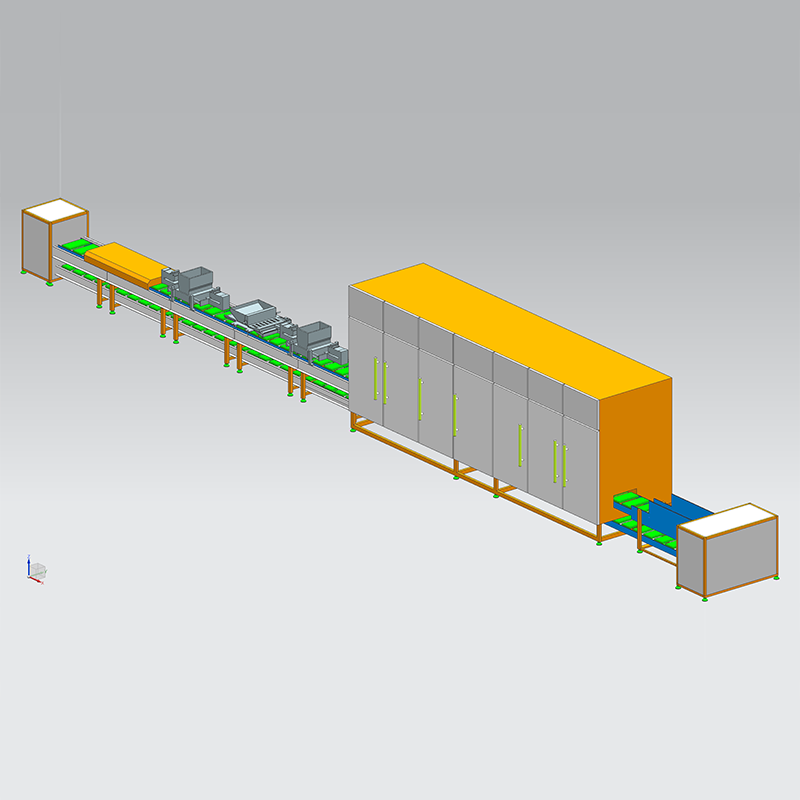
- Available floor length, since enrobing lines with integrated cooling tunnels can run considerably longer than the enrobing head alone
Facilities running mixed product types on the same line should also weigh how quickly the coating weight and belt speed can be adjusted between runs, since frequent changeovers on a line built for a single fixed setting create downtime that erodes the throughput advantage the equipment was purchased for in the first place.
It is also worth planning for future volume growth rather than sizing strictly to current output. Adding a second enrober later, once floor space and utility connections were never accounted for during the original installation, is typically far more disruptive and costly than specifying a slightly larger reservoir or a modular tunnel section up front. Reviewing utility requirements, including compressed air capacity for the air knives and refrigeration load for the cooling tunnel, alongside the mechanical specification avoids a common gap where the enrober itself is correctly sized but the supporting plant infrastructure is not.
Maintenance Practices That Extend Service Life
Enrobing equipment operates continuously with a food product that solidifies on contact with cool surfaces, which means maintenance routines differ somewhat from general purpose production machinery. Three areas tend to account for most unplanned downtime.
| Maintenance Area | Recommended Frequency | Failure Mode If Skipped |
|---|---|---|
| Mesh belt cleaning and tensioning | Daily to weekly | Chocolate buildup causing belt tracking issues |
| Air knife nozzle inspection | Weekly | Uneven coating weight across belt width |
| Tempering tank descaling | Monthly | Reduced heat transfer and temperature drift |
| Cooling tunnel coil check | Quarterly | Insufficient set time leading to soft outfeed product |
Cleaning schedules matter more with chocolate than with many other coating media because residual product left in the reservoir overnight will re-crystallize with a different fat structure than freshly tempered chocolate, and reintroducing it into the bath the next morning without proper re-tempering is a common, avoidable cause of surface bloom on the first batches of a new shift.
Keeping a written log of nozzle inspections, belt tension checks, and tank descaling dates also makes it far easier to spot a slow drift in performance before it becomes a full stoppage. Many unplanned downtime events on enrobing equipment trace back to a maintenance interval that was skipped once and never caught up on, rather than a sudden component failure, which is why a simple recurring checklist tends to deliver a larger return than any single piece of diagnostic equipment.
Product Categories That Benefit Most from Enrobing
Not every coated product needs a full continuous line, but a wide range of categories reach a volume threshold where enrobing equipment becomes the more practical choice over hand dipping or panning. The following categories are the most common candidates for a dedicated enrober.
- Wafers, biscuits, and cookies, where an even bottom seal prevents the base from staying uncoated or sticking to a bare mesh belt
- Nut clusters and granola bars, which require a heavier coating weight and benefit from precise air knife control to avoid pooling around irregular shapes
- Dried fruit and trail mix pieces, where small item size makes hand dipping labor intensive relative to output
- Ice cream bars and frozen novelties, which need a fast-setting curtain pass before the product softens on the belt
- Candy centers and pralines, where consistent shell thickness affects both appearance and shelf stability
Each of these categories places different demands on the same core subsystems. A frozen novelty line, for example, prioritizes curtain speed and a short set time over reservoir capacity, while a nut cluster line prioritizes air knife range because the products themselves are irregular and dense. Reviewing which category a facility falls into before specifying belt width or tunnel length keeps the equipment sizing conversation grounded in the actual product rather than in general purpose figures.
Common Coating Defects and Their Root Causes
Most quality issues traced back to enrobing equipment fall into a small number of recurring patterns. Recognizing which subsystem is responsible for a given defect shortens troubleshooting time considerably, since operators otherwise tend to adjust the wrong control first.
| Defect | Likely Cause | Subsystem to Check |
|---|---|---|
| Uneven coating thickness across belt width | Misaligned or partially blocked air knife nozzles | Air knife assembly |
| Dull or streaky surface finish | Chocolate out of temper before reaching the curtain | Tempering unit |
| Bare or exposed base on finished product | Missing or misadjusted pre-bottomer pass | Pre-bottomer |
| Product sticking together at outfeed | Insufficient cooling tunnel dwell time | Cooling tunnel length or belt speed |
| Chocolate pooling around product base | Excess curtain flow relative to air knife pressure | Curtain head and air knife balance |
Because these defects often surface intermittently rather than on every unit, tracking which shift, product type, or ambient condition correlates with the problem is usually more productive than adjusting the machine reactively after a single flagged batch. Ambient humidity and plant temperature in particular can shift cooling tunnel performance even when every internal setting stays the same, which is why some facilities log room conditions alongside product quality checks during seasonal transitions.
Frequently Asked Questions
Q1: What is the difference between an enrober and a dipping machine?
A dipping machine typically submerges individual items in a static or lightly agitated chocolate bath, while an enrober is a continuous system where product moves under a curtain of chocolate on a mesh belt, followed by air knife trimming and a dedicated cooling tunnel. Enrobers are built for continuous, high volume production, whereas dipping equipment suits smaller or more artisanal runs.
Q2: How is coating thickness controlled on an enrobing line?
Coating thickness is primarily set by air knife pressure and angle rather than by the curtain flow itself. The curtain applies a full excess coat, and the air knives blow off the surplus to leave a target thickness, which can typically be fine tuned in small increments to match product weight requirements.
Q3: What causes chocolate bloom on enrobed products?
Bloom is most often caused by improper tempering, temperature swings during cooling, or storage of finished product in fluctuating warm and cool conditions after packaging. It appears as a dull gray or white surface film and, while not a food safety issue, is treated as a quality defect since it affects appearance and texture.
Q4: Can one enrobing line handle multiple product types?
Most lines can process a range of product shapes and sizes within the limits of belt width and cooling tunnel length, provided coating weight, belt speed, and pre-bottomer settings are adjusted between runs. Facilities with highly varied product mixes should confirm changeover time before selecting a specific configuration.
Q5: How long does a cooling tunnel need to be?
Tunnel length requirements depend on belt speed and the target coating weight, since thicker coatings and faster belt speeds both increase the time needed for the chocolate to fully set before the product reaches the outfeed. This is typically calculated from the combination of dwell time needed and the running belt speed of the specific line.