

 English
  Français
  عربى
عربى How Diversifying Beyond Chocolate Can Multiply Your Candy Shop's Revenue
Content
- 1 Why A Single-Category Candy Shop Leaves Money On The Table
- 2 Where Demand Is Actually Growing
- 3 Matching Equipment To Candy Category
- 4 How A Bar-Format Production Line Actually Runs
- 5 Chocolate Fountain Machines As A Low-Risk Entry Point
- 6 Seasonal Sales Patterns Across Formats
- 7 Comparing Equipment On The Factors That Matter Most
- 8 Planning The Investment In Phases
- 9 A Practical Rollout Checklist
- 10 Frequently Asked Questions
- 10.0.1 Q1: What is the fastest candy category to add to an existing chocolate shop?
- 10.0.2 Q2: How do nougat and cereal bar lines differ in daily operation?
- 10.0.3 Q3: Is gummy candy equipment harder to run than hard candy equipment?
- 10.0.4 Q4: Should a small shop start with a bar line or a display fountain?
- 10.0.5 Q5: How much floor space should be reserved for a second production category?
Why A Single-Category Candy Shop Leaves Money On The Table
Shops that sell only chocolate compete on the narrowest possible shelf. Customers who want something chewy, fruity, or nostalgic walk past the counter and buy elsewhere. Owners who add a second or third production category rarely see cannibalization; instead they see a wider basket size, more repeat visits, and a shop that reads as a destination rather than a single-item stand.
The shift does not require a full factory rebuild. Most operators start with one compact line, learn the workflow, then add a second category once the first line is running at a steady rate. This article walks through the categories worth adding, how the equipment compares, and how to sequence the investment so cash flow stays healthy.
Diversification also changes how a shop is perceived in the local market. A single-category operation is easy for customers to mentally file away as "the chocolate place," which limits how often they think to visit for anything other than a chocolate gift. Once a shop carries chewy bars, gummy pieces, and a rotating hard candy selection, it becomes a general destination for sweets, which increases visit frequency for reasons that have nothing to do with holidays or special occasions.
There is also a practical supply chain argument for spreading production across formats. Sugar, corn syrup, and dairy inputs used in bar and hard candy production are commodities subject to price swings. A shop that only makes one candy type has no way to shift its purchasing mix when one input spikes in price. A shop running two or three lines can lean harder on whichever format currently has the most favorable input costs without changing its total output volume.
Where Demand Is Actually Growing
Before buying equipment, it helps to see which candy formats are pulling customer attention right now. The chart below reflects a composite of retail scan data and shop-level sales logs collected across small and mid-size confectionery operations over a recent twelve-month window.
Relative Category Demand Growth (Indexed)
Chewy bar formats built around nougat and caramel show the strongest pull, followed closely by gummy candy. Both categories share a trait that matters for a shop owner: they are easy to sample, easy to photograph, and easy to sell in mixed bags rather than single units, which lifts average transaction value.
Matching Equipment To Candy Category
Each candy format needs a distinct mixing, forming, and cooling sequence. The table below summarizes the core equipment class, typical batch cycle, and the floor space a small operator should plan for.
| Candy Format | Core Equipment | Typical Cycle | Floor Space |
|---|---|---|---|
| Chewy Bar / Nougat | Nougat cooker, forming and cutting line | 20 to 35 minutes per batch | Medium |
| Cereal Bar | Mixing tank, extrusion and cutting unit | 15 to 25 minutes per batch | Medium |
| Gummy Candy | Depositor, starch mold or silicone mold line | 6 to 10 hours including set time | Medium to large |
| Hard Candy | Cooker, batch roller, die former | 10 to 15 minutes per batch | Small to medium |
| Taffy | Cooker, pulling machine, cutter and wrapper | 15 to 20 minutes per batch | Small |
| Chocolate Fountain | Heated tiered fountain unit | Continuous display, refilled hourly | Small counter footprint |
Notice that fountain equipment is the lightest lift of the group. It requires no forming or cutting stage; it is a display and dipping unit, which makes it a natural first addition for a shop testing a second revenue stream before committing to a full forming line.
Cycle time matters more than most first-time buyers expect. A hard candy cooker that finishes a batch in ten minutes sounds appealing next to a gummy line that needs several hours of set time, but the comparison is misleading on its own. Hard candy requires an operator present for nearly the entire cook and pull sequence, while a gummy depositor can run largely unattended once the mix is poured, freeing staff to handle counter sales or packaging for another line during the set period. When planning labor hours, count attended minutes per batch rather than total elapsed time.
Floor space planning should also account for staging area, not just the footprint of the machine itself. A nougat cooker with a listed footprint of roughly one square meter still needs adjacent counter space for ingredient staging, a cooling rack nearby, and a clear path for moving trays to the wrapping station. Shops that measure only the equipment box and not the surrounding workflow area frequently discover mid-installation that the space they budgeted is too tight for a comfortable production line.
How A Bar-Format Production Line Actually Runs
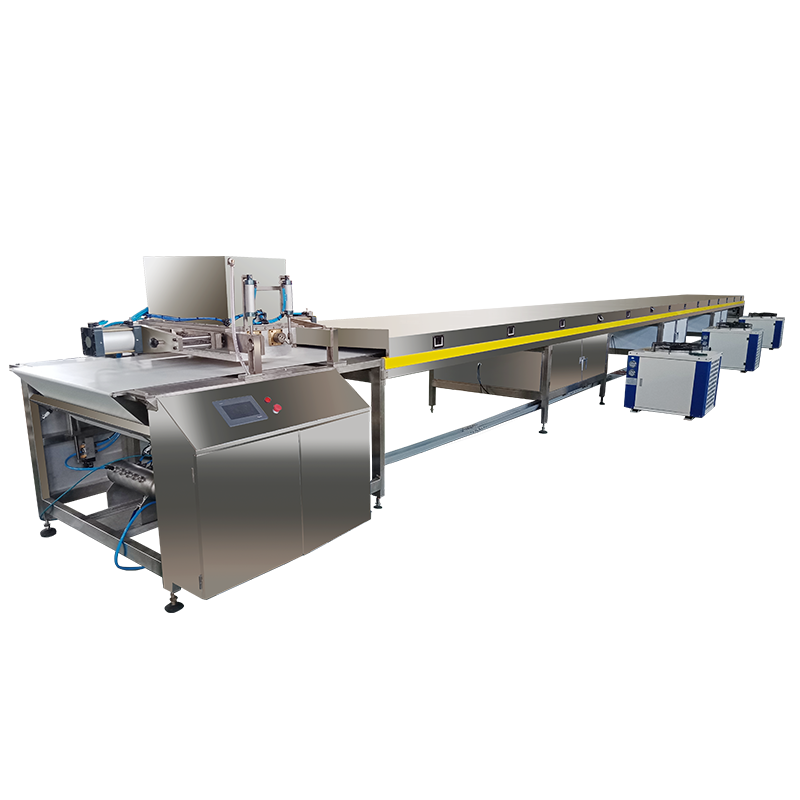
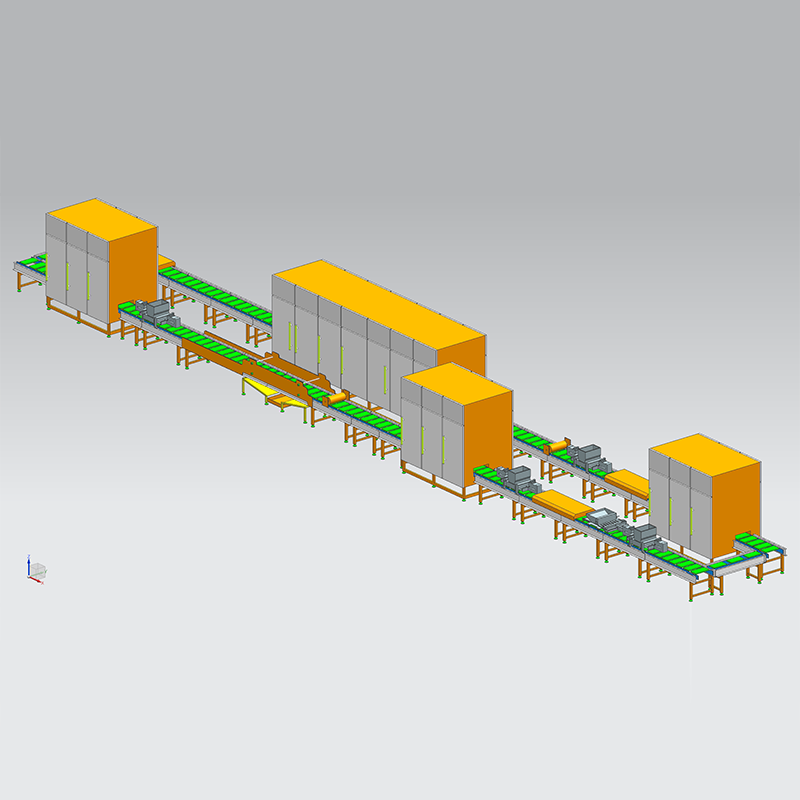
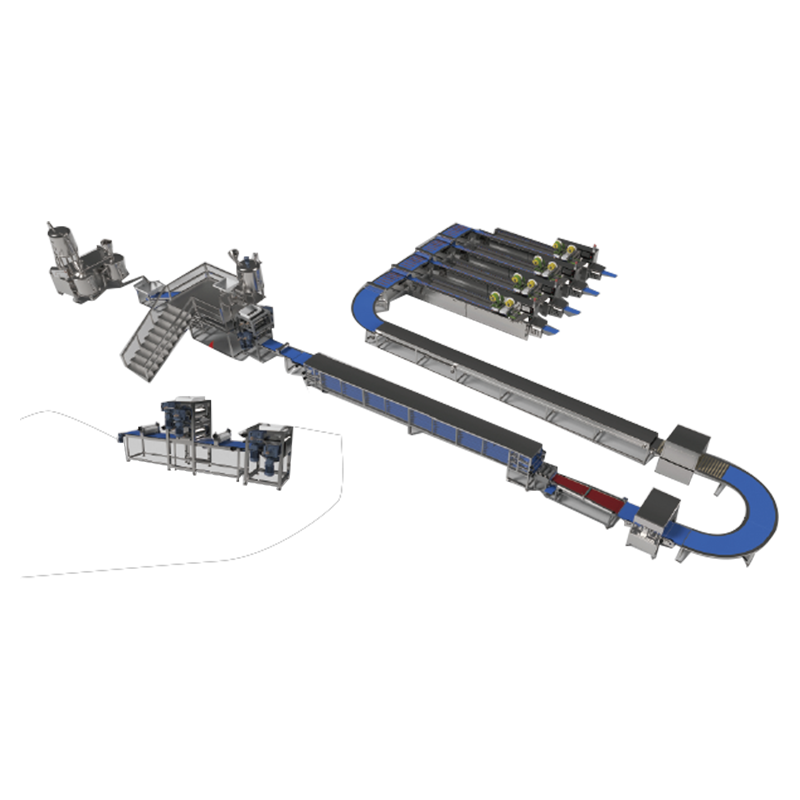
Chewy bar categories share a near-identical workflow whether the base is nougat, caramel, or a cereal blend. Understanding this sequence explains why a Snicker Production Line and a dedicated Nougat Production Line share so much common tooling, and why a shop that already runs one of these can add a Cereal Bar Production Line without retraining staff from zero.
Bar Production Workflow
A cereal bar swaps the cooking stage for a lighter binding step since cereal pieces need less structural cooking than a nougat base, but the forming, cooling, and wrapping stages are nearly identical. That overlap is the practical reason many shops treat nougat and cereal bars as a paired investment rather than two separate purchases.
Cooling tunnel length deserves particular attention when a shop is comparing bar lines. A tunnel that is too short forces bars off the belt while the center is still soft, which leads to deformed edges and wrapping jams downstream. A tunnel that is longer than needed simply wastes floor space and slows the overall line without improving product quality. Matching tunnel length to actual batch volume, rather than buying the longest available option, keeps both quality and footprint in check.
Wrapping is often the stage that determines how smoothly a new bar line integrates with existing shop operations. Bars destined for open-bin sale need minimal wrapping, while bars sold as individually packaged gift items need a wrapping stage that can handle printed film without jamming. Shops planning to sell both formats from the same production run should confirm the wrapping unit can switch between plain and printed film without a lengthy changeover, since that flexibility avoids running two nearly identical lines side by side.
Chocolate Fountain Machines As A Low-Risk Entry Point
A chocolate fountain machine is not a production line in the strict sense; it is a merchandising tool that turns melted chocolate into a live, interactive display. For shops that already buy or temper chocolate for other uses, a fountain adds an experience-driven revenue stream with almost no new raw material sourcing.
- Draws foot traffic near storefront windows and event spaces
- Pairs naturally with fruit skewers, marshmallow cups, and pretzel sticks sold at markup
- Requires only temperature maintenance, not a forming or cooling sequence
- Works well for pop-up events, tastings, and seasonal promotions
The tradeoff is throughput. A fountain is a display device, not a packaging line, so it will never replace a bar or gummy line as a primary revenue source. Most successful operators treat it as an add-on that increases dwell time and cross-sells packaged items rather than as a standalone product category.
Maintenance is simpler than most owners assume, but it is not zero effort. Chocolate held at dipping temperature for extended periods can thicken if the machine cycles on and off inconsistently, which leads to a sluggish flow that looks unappealing to customers standing nearby. A steady daily cleaning routine, along with periodic checks on the motor and heating element, keeps the flow consistent and protects the visual effect that makes the fountain worth having on the floor in the first place.
Placement inside the shop also affects return on the equipment. Fountains positioned near the entrance draw attention from passing foot traffic and encourage impulse dipping purchases, while units placed near a seating or event area work better for scheduled tastings and private bookings. Testing both placements over a few weeks before committing to a permanent counter layout helps identify which location actually converts foot traffic into sales for a specific storefront.
Seasonal Sales Patterns Across Formats
Confectionery sales are rarely flat across the year. Understanding which category rises when helps an owner plan production capacity instead of guessing at inventory levels.
Monthly Sales Trend By Format (Relative Scale)
Hard candy and gummy items spike around spring holidays and summer travel months, when small, shareable pieces sell well in gift bags and travel packs. Bar-format products, including nougat and cereal bars, climb steadily toward autumn and winter as customers shift toward heavier, more filling snack purchases and gift boxes.
These patterns have direct staffing implications. A shop that only runs a bar line will see its busiest production months land right when many other retail categories are also ramping up for year-end demand, which can strain a small team. Pairing a bar line with a gummy or hard candy line smooths the labor curve across the year, since the two categories peak at different times and rarely compete for the same production hours.
Inventory planning benefits from the same logic. Rather than building a single large stockpile ahead of one peak season, a shop running two or three categories can stagger production runs so that storage space and packaging material orders spread out over the year instead of arriving in one large seasonal push. This reduces the working capital tied up in inventory at any single point in time and lowers the risk of overproducing a format that ends up discounted after its peak season passes.
Comparing Equipment On The Factors That Matter Most
Owners evaluating a second or third line usually weigh four factors: upfront cost, staff training time, floor space, and output consistency. The radar comparison below scores five common equipment categories on a relative scale, where a larger shape means a stronger position on that factor.
Equipment Comparison Radar
Hard candy and taffy equipment score well on training time and footprint, making them approachable for a first expansion. Bar-format lines score strongest on output consistency once staff are trained, which is why many multi-category shops eventually anchor their production around a bar line and treat smaller-footprint equipment as satellite categories.
Planning The Investment In Phases
Trying to launch four new categories at once usually strains both cash flow and staff bandwidth. A phased rollout keeps each addition manageable.
Phase 1: Display Add-On
Introduce a chocolate fountain or a small taffy puller. Low cost, minimal training, immediate visual impact for the storefront.
Phase 2: Core Bar Line
Add a nougat or cereal bar line once display equipment has proven customer interest and staff are comfortable with basic batch work.
Phase 3: Gummy Or Hard Candy
Layer in a gummy depositor or hard candy former to round out the product mix and capture the spring and summer sales spike.
Sequencing this way also spreads out staff training. A team that has already learned temperature control on a fountain or taffy puller adapts faster to the cooking stage of a bar line, since the underlying skill of reading sugar and fat temperature carries across categories.
Financing the phased approach is generally easier as well. Lenders and equipment suppliers are more comfortable extending terms for a second or third purchase once a shop can show sales history from an earlier category addition. A single large upfront order across four categories, by contrast, asks a lender to evaluate an untested product mix all at once, which typically results in stricter terms or a larger required down payment than a staged rollout would need.
A Practical Rollout Checklist
- Audit current storefront traffic patterns to identify slow hours a fountain display could fill
- Select one bar-format line and confirm supplier lead time before committing floor space
- Train two staff members on temperature control before the equipment arrives on site
- Run a two week trial batch schedule to measure real cycle time against supplier specifications
- Track sell-through by category for sixty days before adding a second production line
- Reassess floor layout once a second category proves demand, rather than overbuilding upfront
This checklist keeps the expansion grounded in actual sales data rather than assumptions about what customers might want. Shops that skip the trial period tend to overinvest in a format that looks appealing on paper but does not match local buying habits.
It also helps to document each stage of the rollout as it happens, including cycle times, waste rates, and any equipment adjustments made during the trial period. That record becomes the reference point for the next expansion decision, whether that means adding a third production category or simply scaling up the batch size of an existing line. Owners who track this data consistently tend to make faster, better-supported decisions the second and third time they expand, since they are working from their own shop's numbers rather than starting the evaluation process from scratch.
Finally, remember that diversification is a gradual process rather than a single purchase decision. A shop that adds one well-chosen category a year, learns it thoroughly, and lets sales data guide the next choice will generally end up with a stronger, more resilient product mix than one that tries to launch several unfamiliar categories at once. Patience during the rollout protects both cash flow and product quality while the wider assortment builds a shop's reputation as a genuine destination for candy rather than a single-item stop.
Frequently Asked Questions
Q1: What is the fastest candy category to add to an existing chocolate shop?
A chocolate fountain or a compact taffy puller are usually the fastest additions, since both require minimal floor space and short staff training compared to a full forming line.
Q2: How do nougat and cereal bar lines differ in daily operation?
Nougat lines rely on a longer cooking stage to build structure, while cereal bar lines use a lighter binding step. Forming, cooling, and wrapping stages are nearly identical across both.
Q3: Is gummy candy equipment harder to run than hard candy equipment?
Gummy production has a longer overall cycle due to setting time, but the daily hands-on work is comparable to hard candy once staff understand mold handling and depositing volume.
Q4: Should a small shop start with a bar line or a display fountain?
Most small shops start with a display fountain since it validates customer interest with minimal investment before committing to a bar or gummy forming line.
Q5: How much floor space should be reserved for a second production category?
Plan for medium floor space, roughly the footprint of a standard commercial worktable plus clearance for a cooling stage, even if the first equipment purchase is compact.