

 English
  Français
  عربى
عربى Chocolate Panning Machine Guide: How It Works, Key Specs & Buying Tips
During a routine run of chocolate-coated hazelnuts, a production manager notices that some pieces have dull, uneven coatings while others crack at the edges. The problem is not the chocolate recipe. It is the method used to apply that chocolate.
A chocolate panning machine solves this by tumbling each center and spraying chocolate in controlled, even layers until the surface becomes smooth, shiny, and consistent. This guide explains how these machines work, what they can produce, and the specification points that matter before you invest in one.
What Is a Chocolate Panning Machine?
A chocolate panning machine is a rotating drum that applies chocolate, sugar syrups, or other coatings onto a rolling bed of centers. Typical centers include hazelnuts, almonds, peanut pieces, dried fruit, cocoa beans, biscuit crumbs, and even small candies.
The machine is a standard piece of equipment in confectionery plants that produce chocolate dragees, chocolate-covered nuts, or sugar-coated candies. It can be built as a stand-alone unit or integrated into a larger line that includes chocolate holding tanks, pumps, and polishing drums.
How Does a Chocolate Panning Machine Work?
What happens inside the drum is deceptively simple, but the operating principles take several controlled steps.
The Drum and Tumbling Action
The drum is a rotating, slightly tilted cylinder made of stainless steel. As it turns, the centers are lifted and rolled back down. This constant tumbling keeps every piece moving and exposes each one to the coating spray in a random, even way.
The Spraying and Drying Cycle
Hot liquid chocolate is sprayed onto the moving bed in short pulses rather than all at once. Each pulse adds a thin layer. After each pulse, chilled or conditioned air is passed through the drum to set the chocolate. This cycle is repeated until the coating reaches the target thickness.
The number of layers depends on the product and the final size. A typical chocolate nut might require 15 to 40 spray cycles. Each layer must be thin enough to avoid creating lumps and thick enough to build up coverage quickly.
Why Temperature Control Matters
Chocolate panning requires precise temperature control. If the chocolate is too hot, the coating runs and forms a thin film. If it is too cool, the layers build unevenly or crack. Many machines use double-walled drums that can be heated or cooled, with separate control for the spray system and the drying air.
What Products Can You Make with a Panning Machine?
Panning covers a wide range of confectionery products. The most common ones are:
- Chocolate dragees, or smooth-shelled chocolate beads
- Chocolate-covered nuts and dried fruit
- Sugar-coated candies with hard or chewable shells
- Chocolate-covered coffee beans
- Jelly beans and similar gum candies
- Chocolate-coated cookie or biscuit pieces
The same machine can be used for both chocolate panning and sugar panning, as long as the drum has a flexible spray system and controllable airflow. In many factories, one machine is used for different products by changing recipes and nozzles.
Key Specifications to Compare Before Buying
Before choosing a chocolate panning machine, compare the following parameters across suppliers. They have a direct impact on product quality, operating cost, and maintenance.
| Parameter | Typical Range | Why It Matters |
|---|---|---|
| Drum capacity | 50–1,000 kg per batch | Larger drums reduce batch time but need more floor space. |
| Drum rotation speed | 10–30 rpm | A lower range suits delicate centers; higher speeds increase throughput. |
| Air flow and temperature | 10–80 CFM, 10–50°C | Controls drying speed and final gloss. |
| Spray system | Manual or automated | Automated systems use less chocolate and give more consistent layers. |
| Drum angle adjustment | 5 to 15 degrees | Changes the tumbling profile and how quickly pieces move through. |
| CIP capability | With or without | A clean-in-place system saves hours of manual cleaning. |
Pay close attention to how the machine handles the raw materials. If you process delicate centers such as crisped rice or thin crackers, a lower drying air speed and a slower rotation will reduce breakage. On the other hand, hard candy centers allow more aggressive tumbling, so you can prefer a larger capacity and higher speed.
How to Integrate a Panning Machine into Your Production Line
A panning machine rarely operates alone. It works best as part of a coordinated chocolate process line.
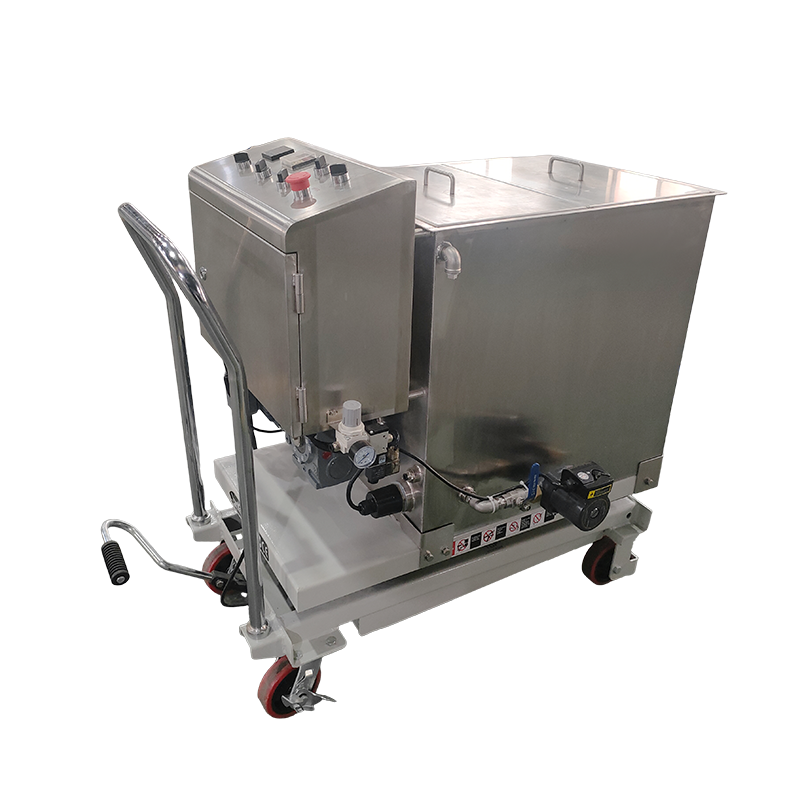
Upstream, melted chocolate must be continuously supplied at a stable temperature and viscosity. That is where a chocolate holding tank and a chocolate pump come in. These units maintain the chocolate at the right temperature and feed it at a constant pressure to the spray station. Without this, the layers will vary from one batch to another.
Downstream, the coated pieces may pass through a cooling tunnel to settle the chocolate, then to a polishing drum. Polishing adds shine and protects the surface during packing. Many producers also use a nut sprinkling machine or a decorating machine before the panning stage if they produce composite products.
When planning a purchase, ask the supplier how the panning machine can be connected to existing equipment. Inquire about the interface for temperature control, air handling, and cleaning circuits.
Common Questions About Chocolate Panning Machines
Q1: Can the same machine handle both chocolate and sugar coatings?
Most panning drums can be configured for both. You need to change the spray nozzle, adjust the air temperature and airflow, and clean the drum thoroughly between product runs. For sugar panning, the drum often runs hotter and uses a more viscous syrup.
Q2: How long does one batch take?
A typical chocolate-coated nut batch takes 30 to 90 minutes, depending on the number of spray cycles, the target coating weight, and the efficiency of the air circulation system.
Q3: What maintenance is required?
Daily rinsing of the spray lines and regular greasing of the drum bearings are the minimum. Focus on the pump seals, nozzles, and the air filter. A clean-in-place system is strongly recommended for high output lines.
Q4: How do I know if a machine is too large for my operation?
Compare the batch capacity with your expected daily output. If you need to produce 500 kg of coated product per day and the machine requires 50 kg batches with a 45 minute cycle, that means 10 batches per day. A single shift can handle this easily. If the batch time extends to 90 minutes, the same output may need more than one shift.
Q5: What chocolate temperature should I use during panning?
Most manufacturers operate with chocolate at 35 to 45°C. The exact range depends on the recipe and the cocoa butter content. Keep a thermometer in the holding tank and a separate sensor in the spray line.