

 English
  Français
  عربى
عربى What is the primary purpose of a chocolate fat melting tank in a production line?
Content
- 1 The Vital Role of the Chocolate Fat Melting Tank in Industrial Processing
- 2 Core Functional Objectives of a Melting Tank
- 3 Key Components Supporting the Production Purpose
- 4 Impact on Chocolate Quality and Texture
- 5 Operational Efficiency and Cost Savings
- 6 Integration with Subsequent Production Stages
- 7 Technical Considerations for B2B Procurement
- 8 Maintenance and Longevity in a 24/7 Environment
- 9 Frequently Asked Questions
The Vital Role of the Chocolate Fat Melting Tank in Industrial Processing
In the world of confectionery manufacturing, the journey from raw ingredients to a smooth, velvety chocolate bar is a complex sequence of thermal and mechanical events. At the heart of this process lies the Chocolate Fat Melting Tank. This specialized equipment is not merely a heated container; it is the gateway to consistent product quality and operational efficiency.
The primary purpose of a chocolate fat melting tank is to transform solid blocks of vegetable fats, cocoa butter, or anhydrous milk fats into a homogeneous liquid state at a precise temperature. Without this controlled transition, the subsequent stages of mixing, conching, and tempering would be impossible to standardize, leading to significant variations in texture, mouthfeel, and shelf stability.
For B2B buyers looking to optimize their production lines, understanding the nuances of the Chocolate Fat Melting Tank is critical. It acts as the "buffer" and "preparer" that ensures the rest of the machinery—such as ball mills or refiners—receives ingredients in a state that minimizes wear and maximizes throughput.
Core Functional Objectives of a Melting Tank
Ensuring Uniform Thermal Conductivity
Fat blocks are naturally poor conductors of heat. If left to melt in a standard vessel, the outer layers would scorch while the core remains solid. A dedicated Chocolate Fat Melting Tank utilizes a water-jacketed heating system that surrounds the product, ensuring that heat is transferred evenly through the entire mass. This prevents local overheating, which can compromise the delicate flavor profile of high-quality fats.
Strategic Decanting and Pre-Processing
In a large-scale production environment, raw materials often arrive in 20kg or 25kg blocks. Manually processing these is inefficient. The melting tank serves as the primary intake point where these solids are liquefied. Once liquid, the fat can be easily metered and pumped through the system, allowing for automated dosing into the mixer. This transition from solid handling to fluid dynamics is the cornerstone of modern industrial automation.
Key Components Supporting the Production Purpose
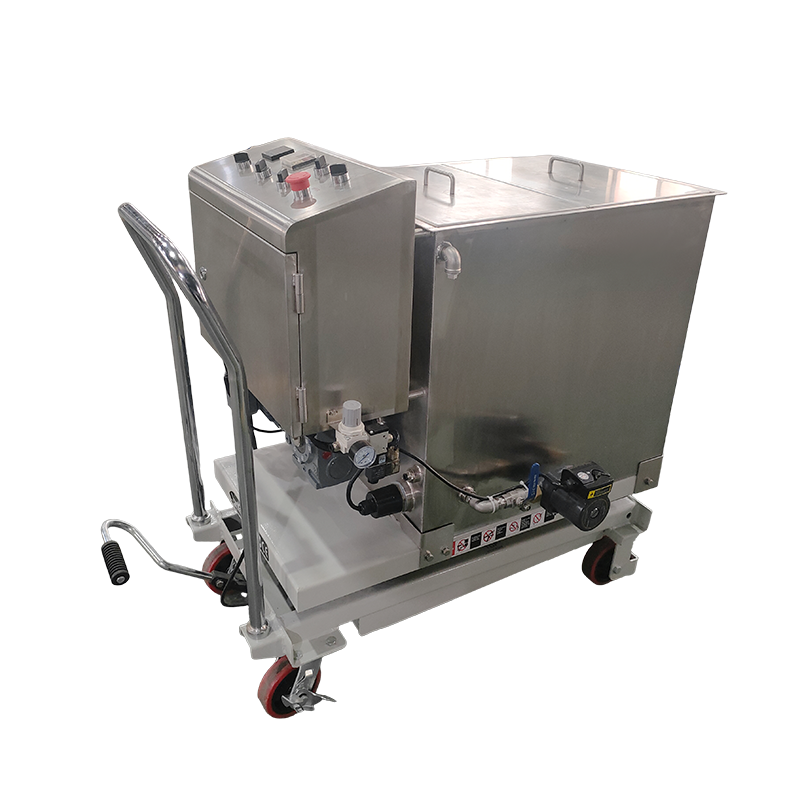
The effectiveness of a melting tank is determined by its internal architecture. Each component is designed to solve a specific challenge in fat processing:
- The Jacketed Shell: Uses hot water circulation to provide a gentle, constant heat source.
- Melting Grids: Positioned at the top, these heated pipes or grids break down solid blocks faster by increasing the contact surface area.
- Agitation System: Keeps the liquid fat in motion to prevent separation and ensure a uniform temperature throughout the tank.
- Temperature Sensors: High-precision probes that feed data back to a control panel, maintaining the fat within a strict range, usually 40 to 60 degrees Celsius.
Impact on Chocolate Quality and Texture
Crystal Structure Management
Chocolate is a suspension of non-fat particles (sugar, cocoa solids) in a continuous fat phase. If the fat is not properly melted and de-crystalized before mixing, it can lead to "fat bloom" or a grainy texture in the final product. The Chocolate Fat Melting Tank ensures that all pre-existing fat crystals are completely destroyed, providing a "blank slate" for the subsequent tempering process to create the desired Beta V crystals.
Prevention of Contamination
High-quality melting tanks are constructed from SUS304 or SUS316L stainless steel. This is not just for durability; it ensures that the fats do not react with the metal, which could lead to oxidation or off-flavors. The sealed nature of the tank also protects the fat from ambient moisture—the enemy of chocolate production—which can cause "thickening" or "seizing" of the mass.
Operational Efficiency and Cost Savings
Investing in a high-capacity melting tank directly affects the bottom line. By liquefying fats in advance, the main mixing and refining machines can operate at 100% capacity without waiting for ingredients to melt. This reduces the cycle time per batch significantly.
| Feature | Direct Benefit | Production Impact |
| Rapid Melting Grids | Shortened melting cycles | Higher throughput per shift |
| Insulated Jackets | Minimized heat loss | Lower energy consumption |
| Automated Pumping | Reduced manual labor | Lower operational costs |
Integration with Subsequent Production Stages
Feeding the Conche and Refiner
Once the fat is melted, it is often blended with cocoa liquor and sugar. The melting tank provides a steady flow of liquid fat, which acts as a lubricant during the refining process. This lubrication is essential for protecting the rollers or beads in the refining equipment from excessive friction and heat buildup.
Synchronizing with Storage Tanks
In many lines, the melting tank feeds into a larger storage or holding tank. This setup allows for a continuous supply even when the initial melting phase is between batches. By maintaining a buffer stock of liquid fat, the production line avoids downtime, which is the most significant cost driver in industrial manufacturing.
Technical Considerations for B2B Procurement
When selecting a Chocolate Fat Melting Tank, technical specifications must align with the specific fat types used in the facility. Different fats have different melting points and viscosities. Key considerations include:
- Capacity Requirements: Ranging from 100L for artisanal lines to 5000L for industrial giants.
- Heating Source: Options usually include electric immersion heaters or steam coils, depending on the factory's existing infrastructure.
- Agitator Speed: Must be sufficient to homogenize but gentle enough to avoid aerating the fat.
Maintenance and Longevity in a 24/7 Environment
The "purpose" of the tank also extends to its reliability. In a 24/7 production cycle, any failure in the melting stage halts the entire factory. Robust melting tanks feature redundant heating elements and easy-to-clean designs. The use of high-grade gaskets and seals prevents leaks, which are not only wasteful but also pose significant slip hazards in a food processing environment.
Regular maintenance involves checking the water levels in the jacket and calibrating the temperature sensors. Because fat can go rancid if left in "dead zones," the tank design must prioritize zero-residue drainage. A well-maintained tank can last for decades, providing a very high return on investment (ROI).
Frequently Asked Questions
Q1: Why can't I just melt fat in the mixer?
While possible, melting in the mixer is highly inefficient. It ties up expensive mixing equipment for hours on a task that a simpler melting tank can do faster and with better temperature control, ultimately reducing your overall production capacity.
Q2: What temperature should the melting tank be set to?
This depends on the fat. Typically, for cocoa butter, the tank is set between 45 and 55 degrees Celsius. It is crucial to stay below 60 degrees to prevent the fat from developing "burnt" notes or oxidizing.
Q3: How does the tank handle different types of fat?
The tank is versatile. Most modern systems allow for adjustable temperature settings, making it suitable for cocoa butter, palm oil, or specialized milk fats. The agitation system ensures that even if fats with different densities are mixed, the result is a uniform liquid.
Q4: Is the tank difficult to clean during flavor changes?
No, provided it is a high-quality stainless steel model. Most tanks are designed with smooth internal surfaces and rounded corners to facilitate quick cleaning and minimize cross-contamination between different fat recipes.