

 English
  Français
  عربى
عربى How to make chocolate chips?How are chocolate chips made in a factory?
Content
- 1 What Are Chocolate Chips and How Are They Made?
- 2 Core Ingredients in Chocolate Chips
- 3 Step-by-Step: How Chocolate Chips Are Made in a Factory
- 4 Factory Equipment Used to Make Chocolate Chips
- 5 Key Quality Control Points in Chocolate Chip Production
- 6 Differences Between Home and Factory Chocolate Chip Making
- 7 Common Types of Chocolate Chips Produced Industrially
- 8 Factors That Affect Chocolate Chip Quality
- 9 FAQ
- 9.0.1 Q1: What is the main difference between chocolate chips and regular chocolate?
- 9.0.2 Q2: How long does it take to make chocolate chips in a factory?
- 9.0.3 Q3: What makes chocolate chips bake-stable?
- 9.0.4 Q4: What output capacity do industrial chocolate chip lines typically have?
- 9.0.5 Q5: Can white chocolate chips be made on the same line as dark chocolate chips?
- 9.0.6 Q6: What is "bloom" in chocolate chips and how is it prevented?
- 9.0.7 Q7: Are compound chocolate chips real chocolate chips?
What Are Chocolate Chips and How Are They Made?
Chocolate chips are small, drop-shaped pieces of chocolate used in baking, confectionery, and snack production. They are made by combining cocoa mass, cocoa butter, sugar, milk powder (for milk chocolate variants), and emulsifiers, then depositing the blended mixture into uniform molds or onto cooling belts. The result is a stable, heat-resistant morsel that retains its shape during baking.
At the industrial level, chocolate chip manufacturing is a continuous, automated process involving precision tempering, depositing, and cooling — producing millions of chips per hour with consistent weight, shape, and gloss.
Core Ingredients in Chocolate Chips
Understanding the ingredients is the first step in understanding how chocolate chips are made. The exact recipe varies by chocolate type (dark, milk, white), but the key components are:
| Ingredient | Role | Typical Proportion |
|---|---|---|
| Cocoa mass / Cocoa liquor | Provides chocolate flavor and color | 25–55% (dark chips) |
| Cocoa butter | Creates smooth texture and snap | 10–30% |
| Sugar | Sweetness and structure | 20–50% |
| Milk powder | Creaminess (milk/white chips only) | 10–25% |
| Lecithin (soy/sunflower) | Emulsifier for flow control | 0.2–0.5% |
| Vanilla / Vanillin | Flavor enhancement | 0.1–0.3% |
Higher cocoa butter content produces glossier, more brittle chips, while reduced cocoa butter (often replaced by vegetable fats) creates "bake-stable" chips that resist melting at oven temperatures above 180°C (356°F).
Step-by-Step: How Chocolate Chips Are Made in a Factory
Industrial chocolate chip production follows a well-defined sequence. Each stage is critical to the final product's quality, texture, and shelf life.
Step 1 — Mixing and Refining
Raw ingredients are combined in a high-shear mixer. The mixture is then passed through a 5-roll refiner, reducing particle size to 18–25 microns — the threshold below which the human tongue cannot detect grittiness. Finer grinding produces smoother chocolate but requires more energy and time.
Step 2 — Conching
The refined paste enters a conche, where it is continuously agitated at temperatures between 50°C and 80°C for 8 to 72 hours, depending on the desired flavor profile. Conching drives off volatile acids, develops aroma, and coats every particle with cocoa butter for a silky mouthfeel. Longer conching time generally yields more refined flavor.
Step 3 — Tempering
Tempering is arguably the most technically demanding step. Chocolate is precisely cycled through temperatures — typically melted at 45–50°C, cooled to 27°C, then reheated to 29–32°C — to encourage the formation of stable cocoa butter crystals (Form V or Beta crystals). Properly tempered chocolate has a glossy surface, clean snap, and resists bloom (white surface discoloration) during storage.
Automated continuous tempering machines in factories maintain these temperature curves with ±0.1°C accuracy, ensuring batch-to-batch consistency.
Step 4 — Depositing
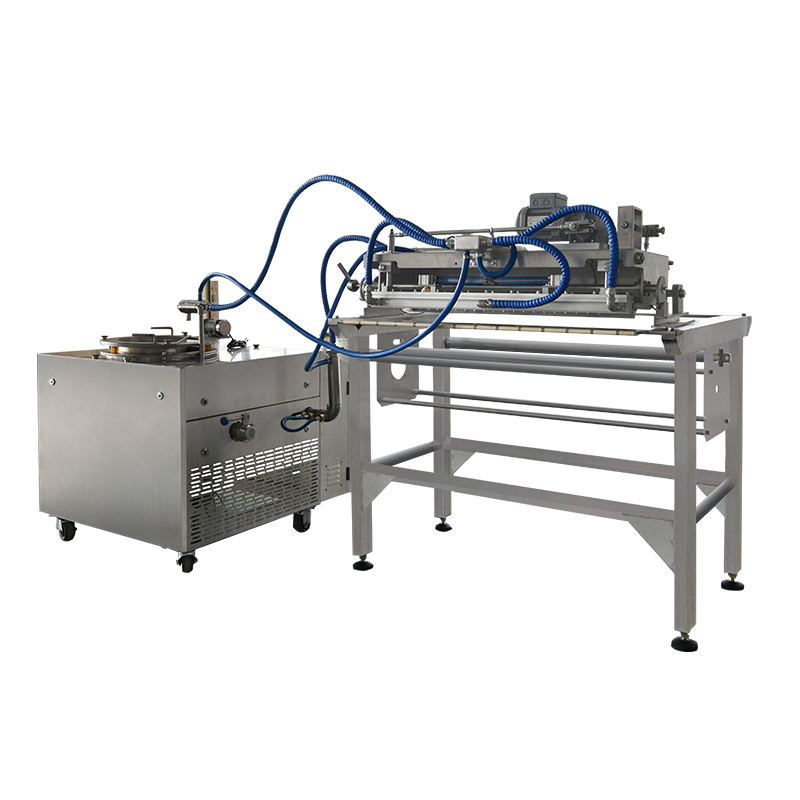
Tempered chocolate is fed into a depositing machine, which pumps precise volumes of chocolate through nozzle heads onto a moving stainless steel conveyor belt or into molds. Drop size is controlled by nozzle diameter and pump pressure. A standard chocolate chip weighs between 3g and 5g, while mini chips can be as light as 0.5g.
High-speed depositors can place 600 to 1,200 drops per minute per lane, with multi-lane configurations producing tens of thousands of chips per minute.
Step 5 — Cooling and Solidification
Deposited chips pass through a cooling tunnel set at 8–15°C for 5 to 15 minutes. Controlled cooling locks in the tempered crystal structure, giving chips their characteristic gloss and snap. Too rapid cooling can cause cracking; too slow cooling may result in bloom or soft texture.
Step 6 — Demolding and Polishing (Optional)
For mold-produced chips, a demolder vibrates and inverts the molds to release the solidified pieces. Some premium chips are then tumble-polished with cocoa powder or sugar to improve surface finish or reduce stickiness.
Step 7 — Sorting, Weighing, and Packaging
Chips pass through optical sorters and checkweighers to remove malformed or undersized pieces. Acceptable chips are conveyed to multi-head weighers, then filled into bags, cartons, or bulk containers under nitrogen flush to extend shelf life. Industrial lines typically package 500kg to 2,000kg of chocolate chips per hour.
Factory Equipment Used to Make Chocolate Chips
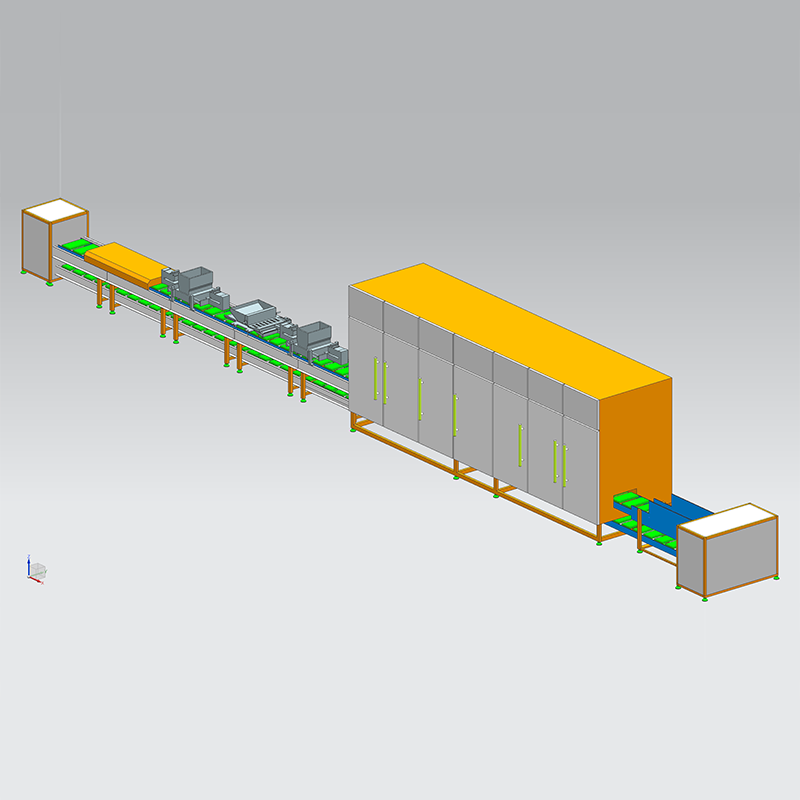
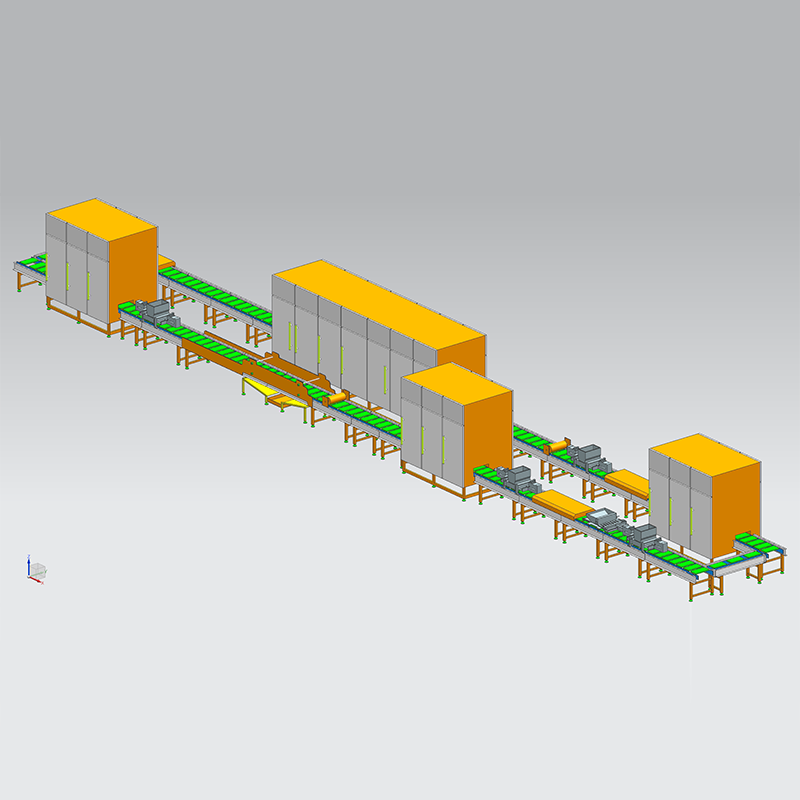
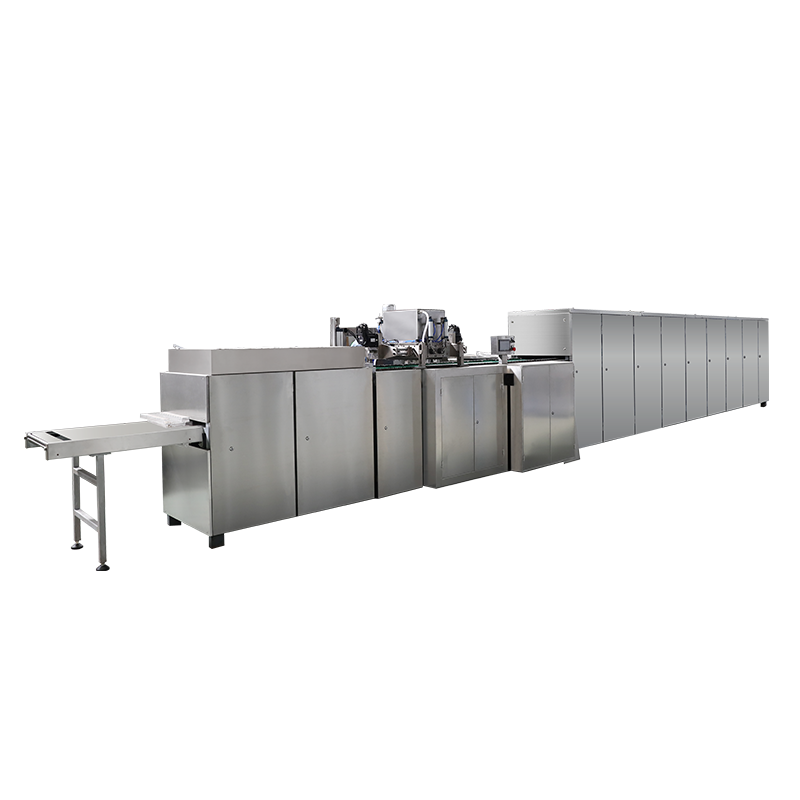
A complete industrial chocolate chip production line integrates multiple specialized machines working in sequence:
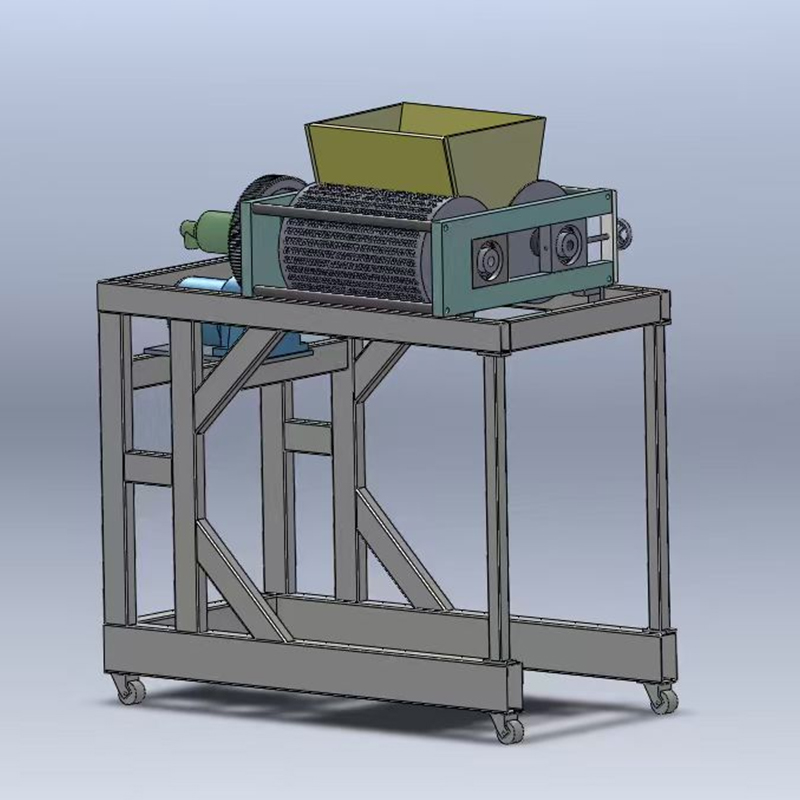
- Ball mill / 5-roll refiner: Grinds cocoa and sugar particles to optimal fineness.
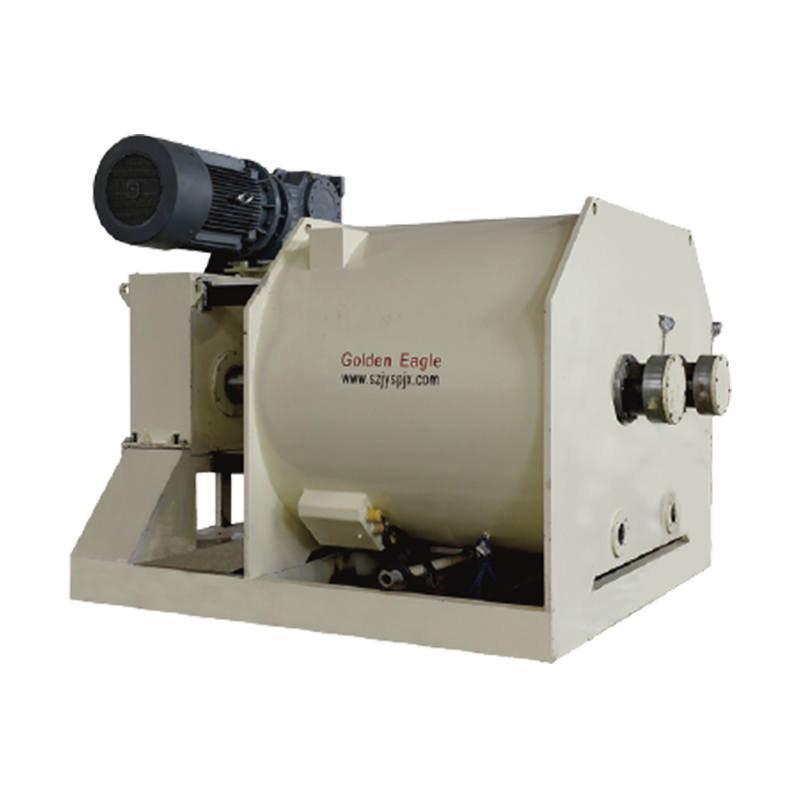
- Conching machine: Develops flavor and rheology over extended processing times.
- Continuous tempering machine: Automates precise temperature cycling for crystal structure control.
- Depositor / enrober: Dispenses exact quantities of chocolate onto the conveyor or into molds.
- Cooling tunnel: Solidifies chips under controlled temperature and airflow.
- Optical sorting system: Detects and removes defective chips based on shape, size, and color.
- Multi-head weigher + packaging machine: Automates portion control and sealing.
For manufacturers seeking an integrated solution, a dedicated chocolate chip making machine production line combines all these units in a single, coordinated system — reducing manual handling, improving hygiene, and enabling output rates from 200kg/h up to 2,000kg/h depending on configuration.
Key Quality Control Points in Chocolate Chip Production
Industrial chocolate chip production requires strict quality monitoring at multiple stages to ensure food safety, consistency, and consumer satisfaction.
Particle Size Analysis
Samples are taken after refining and tested with a micrometer or laser diffraction instrument. Target fineness is typically 20 microns D90, meaning 90% of particles fall below 20 microns.
Viscosity and Flow Testing
Chocolate rheology is measured using a rotational viscometer. Casson viscosity and yield value determine how the chocolate flows through depositing nozzles. Out-of-spec viscosity causes irregular drop sizes or clogged nozzles.
Temper Meter Reading
A temper meter measures the temperature rise curve during chocolate solidification. A temper index (TI) of 5 to 6 indicates optimal tempering. Lower values mean under-tempered (dull, soft chips); higher values indicate over-tempering (grainy texture).
Weight and Dimension Check
Inline checkweighers verify each chip or batch meets the declared net weight. Vision systems check chip height, diameter, and shape uniformity.
Microbiological Testing
Finished products are tested for total plate count, yeast and mold, Salmonella, and E. coli before release. Low water activity in chocolate (typically Aw < 0.5) naturally inhibits microbial growth, but contamination from raw ingredients or equipment remains a risk.
Differences Between Home and Factory Chocolate Chip Making
While home bakers can create rudimentary chocolate drops by piping melted chocolate onto parchment, industrial production differs fundamentally:
| Aspect | Home Production | Factory Production |
|---|---|---|
| Batch size | Grams to kilograms | Hundreds to thousands of kg/hour |
| Tempering | Manual, thermometer-guided | Automated continuous tempering machine |
| Shape consistency | Variable | ±0.1mm dimensional tolerance |
| Particle size | Uncontrolled (100+ microns) | Refined to 18–25 microns |
| Shelf life | Days to weeks | 12–24 months with packaging |
| Flavor development | Minimal conching | 8–72 hours of controlled conching |
Common Types of Chocolate Chips Produced Industrially
Factories produce a wide range of chip types to serve different markets:
- Dark chocolate chips: 50–70% cocoa content; intense flavor, used in premium baking.
- Milk chocolate chips: 30–45% cocoa; sweeter, widely used in cookies and trail mixes.
- White chocolate chips: No cocoa solids; made from cocoa butter, sugar, and milk; used for color contrast.
- Bake-stable chips: Formulated with vegetable fats to hold shape above 180°C; essential for industrial cookie production.
- Mini chips: Under 5mm diameter; used in muffin mixes, granola bars, and ice cream coatings.
- Compound chips: Use cocoa powder + vegetable fat instead of cocoa butter; lower cost, easier tempering.
Factors That Affect Chocolate Chip Quality
Several variables determine the final sensory and physical quality of chocolate chips:
- Cocoa bean origin and roasting profile — affects flavor precursors and acidity level.
- Refining fineness — finer particles mean smoother mouthfeel but longer processing time.
- Conching duration and temperature — longer conching reduces bitterness and develops roundness.
- Tempering accuracy — directly determines gloss, snap, and bloom resistance.
- Cooling tunnel profile — governs crystal structure formation and chip hardness.
- Packaging atmosphere — nitrogen flushing prevents oxidative rancidity during storage.
FAQ
Q1: What is the main difference between chocolate chips and regular chocolate?
Chocolate chips are specifically formulated with reduced cocoa butter or added vegetable fats to maintain their shape at baking temperatures. Regular eating chocolate has higher cocoa butter content and melts more readily.
Q2: How long does it take to make chocolate chips in a factory?
From raw ingredients to packaged chips, the process typically takes 24 to 72 hours, with conching alone accounting for 8 to 48 hours depending on the quality tier.
Q3: What makes chocolate chips bake-stable?
Bake-stable chips replace some or all cocoa butter with higher-melting-point vegetable fats (e.g., palm kernel oil), raising the melting point above standard oven temperatures so chips hold their shape during baking.
Q4: What output capacity do industrial chocolate chip lines typically have?
Industrial chocolate chip production lines range from 200kg/h for small-scale operations to over 2,000kg/h for high-capacity plants, depending on depositor configuration and cooling tunnel length.
Q5: Can white chocolate chips be made on the same line as dark chocolate chips?
Yes, but thorough cleaning and flushing between runs is essential to prevent color contamination. Dedicated lines or modular changeover systems are preferred in large factories.
Q6: What is "bloom" in chocolate chips and how is it prevented?
Bloom is a white or gray surface discoloration caused by unstable fat crystals (fat bloom) or sugar recrystallization (sugar bloom). Proper tempering, controlled cooling, and moisture-proof packaging prevent both types.
Q7: Are compound chocolate chips real chocolate chips?
Technically, no. Compound chips use vegetable fats instead of cocoa butter and do not meet the legal definition of "chocolate" in most countries. However, they are widely used in industrial food production for cost and processing advantages.