

 English
  Français
  عربى
عربى How Chocolate Processing Equipment Determines Product Quality From Batch to Bar
Content
- 1 What Happens Before Chocolate Ever Looks Like Chocolate
- 2 The Core Stages of the Chocolate Manufacturing Process
- 3 Conching: Why Flavor and Smoothness Are Built, Not Added
- 4 Ball Milling: Refining Particle Size for a Cleaner Mouthfeel
- 5 Tempering: Controlling Crystal Structure for Snap and Gloss
- 6 Chocolate Fountain Machines and the Retail or Service Side of the Business
- 7 Comparing Core Processing Equipment: What Each Machine Solves
- 8 Planning a Small to Mid-Scale Chocolate Production Line
- 9 Frequently Asked Questions
- 9.0.1 Q1: What is the difference between conching and ball milling?
- 9.0.2 Q2: Can chocolate be sold without tempering?
- 9.0.3 Q3: How does particle size affect shelf life, not just texture?
- 9.0.4 Q4: Is a chocolate fountain machine part of the manufacturing process?
- 9.0.5 Q5: What is the most common mistake new chocolate businesses make with equipment?
What Happens Before Chocolate Ever Looks Like Chocolate
Most people who taste a smooth, glossy bar assume the recipe is what makes it good. In reality, the recipe only sets the starting point. What actually separates a gritty, dull product from a clean, well-tempered one is the sequence of mechanical and thermal processing steps applied after the raw ingredients are combined. For anyone planning to start a small or mid-scale chocolate operation, understanding this sequence is not optional background knowledge, it is the difference between a product that sells and one that gets returned.
This article walks through the practical stages of chocolate production, from particle refinement to final crystallization, and explains what each stage of equipment is actually solving for. The goal is not to sell a machine, but to help a new operator understand why each stage exists, what happens if it is skipped, and how to think about building a line that matches the scale of the business.
The Core Stages of the Chocolate Manufacturing Process
Before looking at individual machines, it helps to see the full sequence. A typical small-to-mid scale chocolate manufacturing process moves through six connected stages, and each one depends on the quality of the step before it.
The three highlighted stages, conching, ball milling, and tempering, are where the majority of texture and appearance problems either get solved or get baked in permanently. Roasting and grinding set the flavor foundation, but conching, milling, and tempering are what most operators underestimate when they are budgeting their first production line.
Conching: Why Flavor and Smoothness Are Built, Not Added
Conching is a prolonged mixing and aeration stage where chocolate mass is continuously worked, generating friction and controlled heat. During this stage, residual moisture and volatile acids are driven off, particles are coated more evenly with cocoa butter, and harsh flavor notes are rounded out. Skipping or shortening conching is one of the most common reasons a small-batch chocolate tastes sharp, sour, or unpleasantly gritty even when the raw cocoa quality was good.
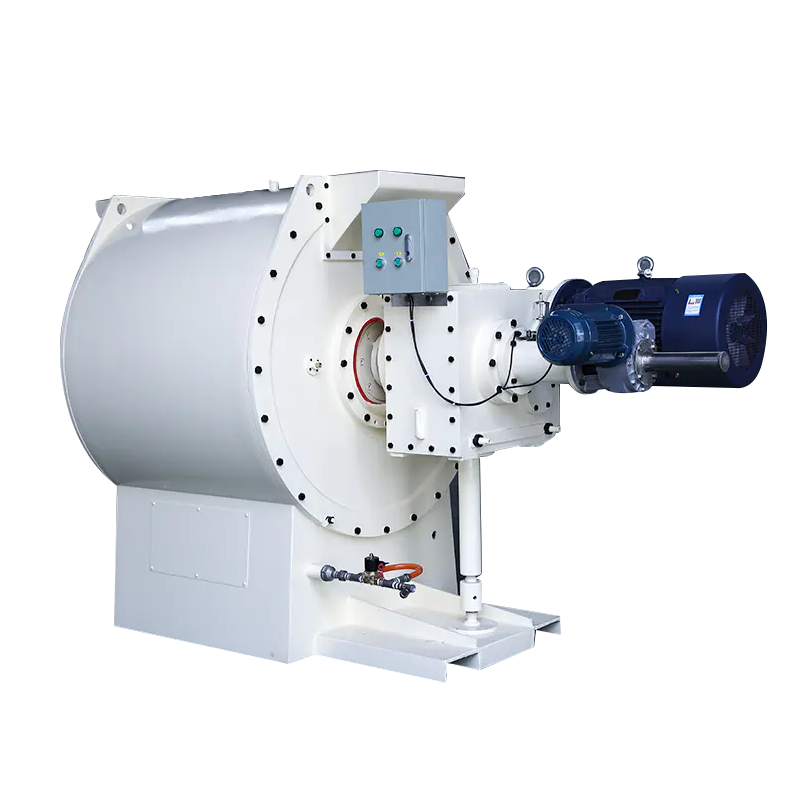
Continuous conching equipment used for flavor development and moisture reduction
For businesses moving beyond hand-conching or small tabletop units, a dedicated QYJ Series Chocolate Conche Machine is typically the point where flavor consistency becomes repeatable batch to batch, rather than dependent on how long an operator happened to run the mixer that day. Consistency here matters commercially: a buyer who tastes a slightly different product every order will not stay a repeat buyer.
What Conching Time Actually Affects
- Removal of unwanted acidity and volatile compounds from fermentation
- Even distribution of cocoa butter around solid particles
- Perceived smoothness before any particle-size reduction happens
- Overall flavor rounding, reducing bitterness and astringency
Ball Milling: Refining Particle Size for a Cleaner Mouthfeel
Even a well-conched chocolate mass will feel gritty on the tongue if the solid particles inside it, cocoa solids and sugar, are too large. Human perception of graininess in chocolate is closely tied to particle size distribution, which is why refining equipment exists as a distinct stage rather than being folded entirely into conching.
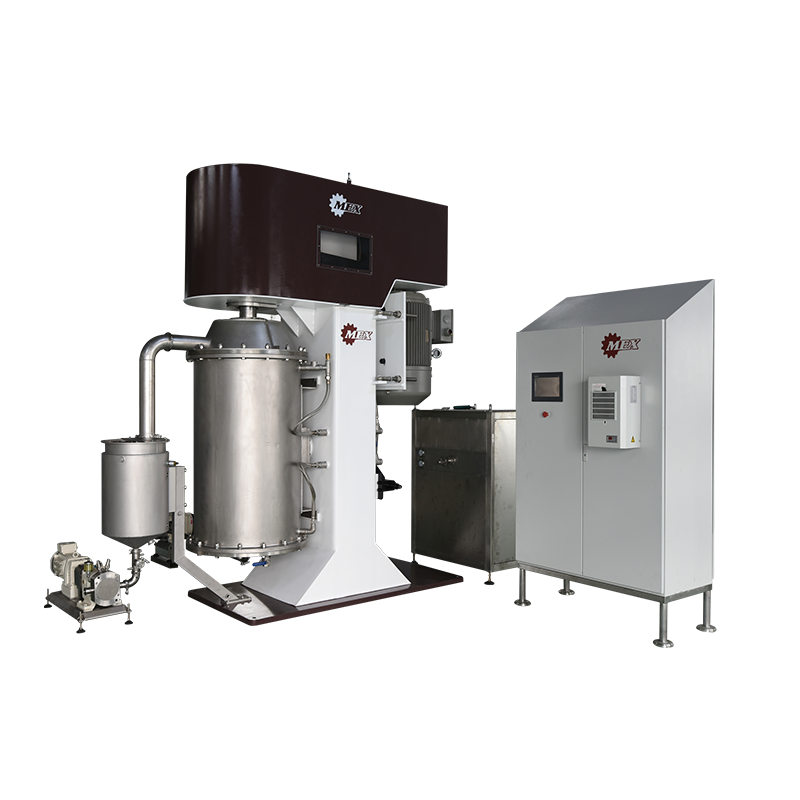
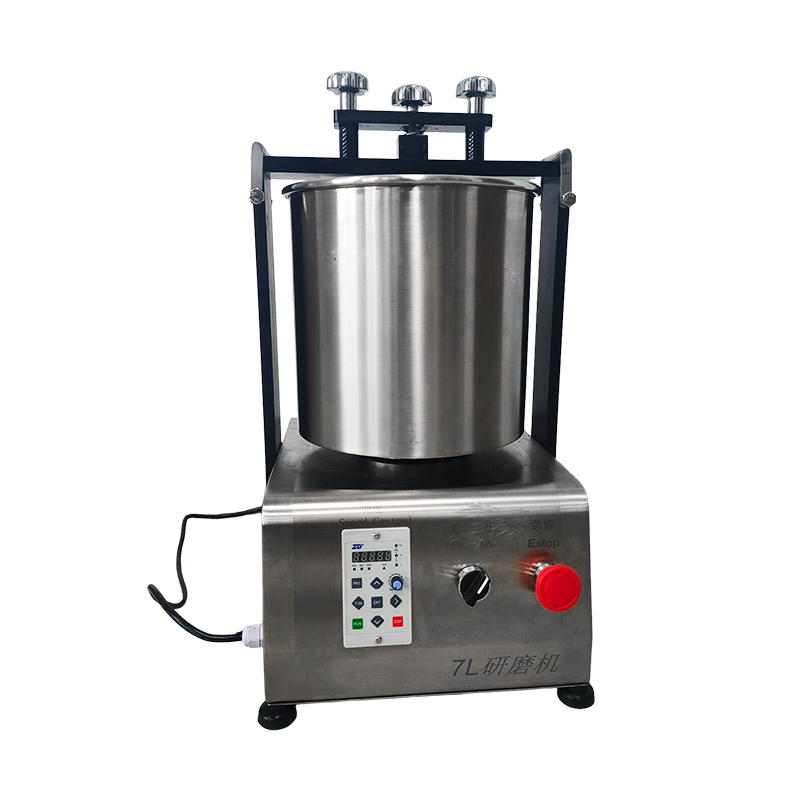
Vertical ball mill refiner used to reduce and standardize particle size
A QMJ Series Chocolate Ball Mill(New) uses steel balls in a rotating or agitated chamber to grind particles down through repeated impact and shear, rather than relying purely on roller pressure. This approach is particularly useful for smaller operations because it tends to occupy less floor space than traditional five-roll refiners while still achieving a comparably fine, smooth result.
| Particle Size Range | Typical Mouthfeel | Common Outcome |
|---|---|---|
| Above 30 microns | Noticeably gritty | Consumer rejection, especially in premium segment |
| 20 to 30 microns | Slightly grainy | Acceptable for industrial or coating applications |
| Below 20 microns | Smooth, creamy | Standard target for retail eating chocolate |
Tempering: Controlling Crystal Structure for Snap and Gloss
Tempering is frequently the stage where new chocolate businesses lose the most product. Cocoa butter can solidify into several different crystal forms, and only one of them produces the glossy surface, firm snap, and resistance to melting at room temperature that consumers expect. Untempered or poorly tempered chocolate sets dull, streaky, and soft, and it develops a pale surface discoloration over time as unstable fat crystals migrate and recrystallize.
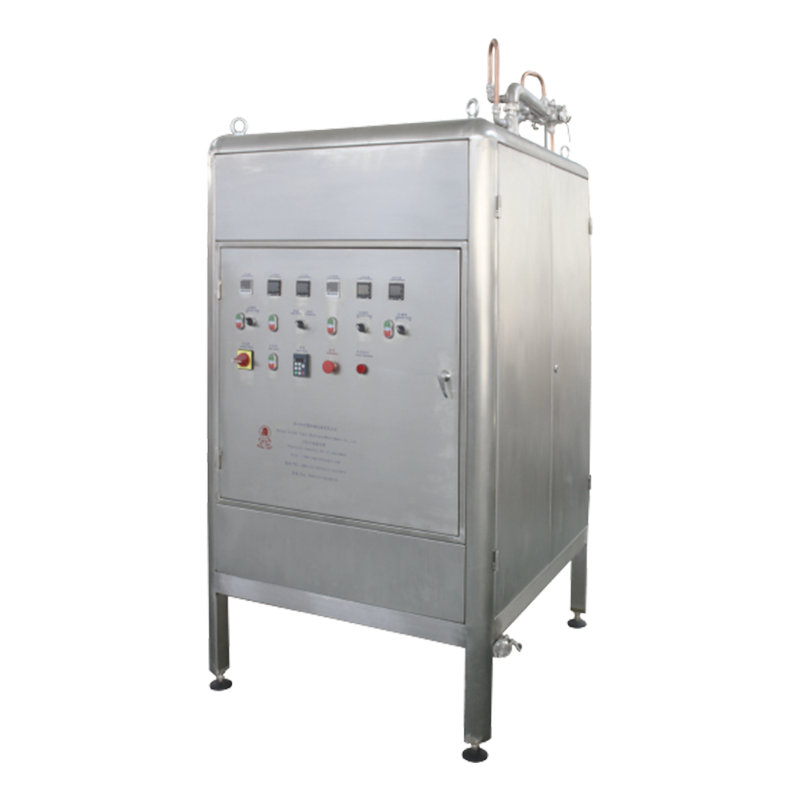
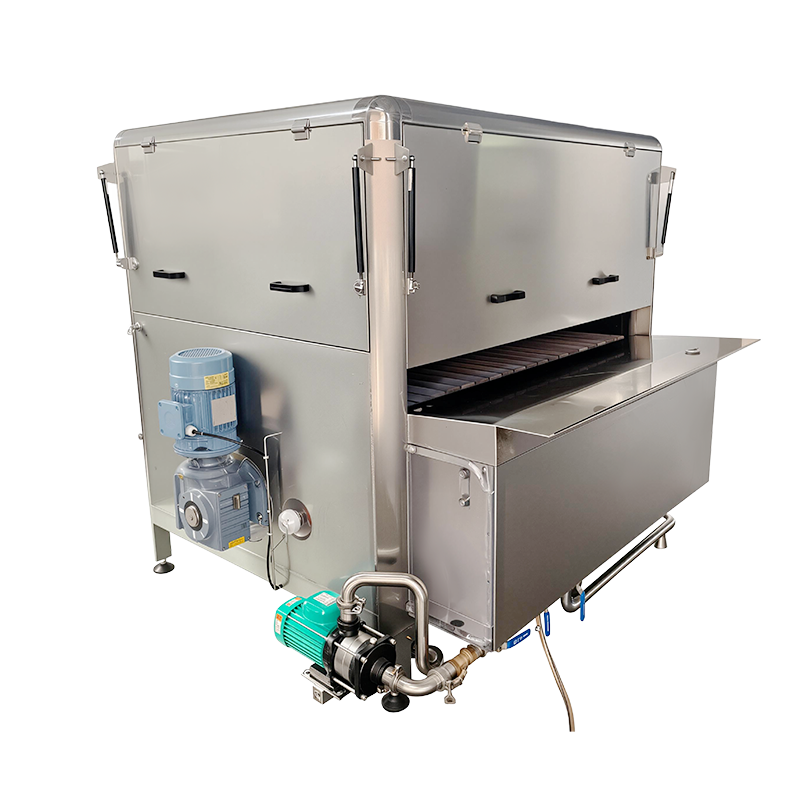
Continuous tempering unit maintaining a controlled heating and cooling cycle
The tempering process moves melted chocolate through a controlled sequence: cooling it to encourage crystal formation, then gently rewarming it to melt out the unstable crystal types while preserving the stable ones. A QTJ Series Chocolate Tempering Machine automates this cycle so that output stays consistent regardless of ambient kitchen or factory temperature, which is otherwise one of the hardest variables to control manually.
A batch that is even a few degrees off during the cooling phase can shift from a glossy, snapping bar to a dull, soft one, without any change to the recipe itself. Temperature control is the variable, not the ingredients.
Typical Tempering Stage Targets for Dark Chocolate
| Stage | Approximate Range | Purpose |
|---|---|---|
| Initial melt | 45 to 50 degrees Celsius | Fully melt all existing crystal structures |
| Controlled cooling | 27 to 28 degrees Celsius | Encourage formation of stable and unstable crystals |
| Reheating | 31 to 32 degrees Celsius | Melt out unstable crystals, keep stable form |
These ranges shift somewhat for milk or white chocolate due to differing fat and milk solid content, which is why tempering equipment with adjustable, repeatable cycles is more practical for a business handling multiple product lines than manual tempering on a stone slab.
Chocolate Fountain Machines and the Retail or Service Side of the Business
Not every piece of equipment in a chocolate business is about producing the raw bar or coating. A chocolate fountain machine serves a different purpose: keeping already-tempered chocolate in a fluid, presentable state for events, buffets, dessert bars, and in-store demonstrations. It is a display and service tool rather than a processing tool, but it still depends heavily on the quality of tempering done upstream.
Chocolate that has not been properly tempered before going into a fountain will separate, thicken unevenly, or develop a waxy surface film as it recirculates. This is a common complaint from operators who assume the fountain itself is responsible for smooth flow, when the real issue traces back to the tempering stage that happened before the chocolate ever reached the fountain. For businesses planning to offer live chocolate service alongside packaged products, it is worth treating the fountain as the final presentation layer of a process that starts several stages earlier.
- Fountains work best with couverture-style chocolate that has a higher cocoa butter content for fluidity
- Pre-tempering before loading the fountain reduces bloom and separation during service
- Consistent particle size from earlier refining stages affects how smoothly the chocolate flows over the tiers
Comparing Core Processing Equipment: What Each Machine Solves
New operators often ask which single machine matters most. The honest answer is that each stage solves a different problem, and skipping one usually cannot be compensated for by improving another.
| Equipment | Primary Function | Problem It Prevents |
|---|---|---|
| Conche | Flavor development, moisture and acid reduction | Harsh, sour, or unrounded flavor |
| Ball mill | Particle size reduction and refining | Gritty or grainy mouthfeel |
| Temperer | Fat crystal control during cooling | Dull surface, soft texture, poor shelf stability |
| Fountain machine | Holding tempered chocolate for service or display | Separation and thickening during presentation |
Planning a Small to Mid-Scale Chocolate Production Line
Choosing equipment before understanding daily output targets is one of the most common early mistakes. A useful approach is to plan backward from expected order volume, then check that each stage in the line can keep pace with the next one, since a bottleneck at any single stage limits the entire line regardless of how capable the surrounding equipment is.
- Estimate realistic weekly output based on committed or projected orders, not maximum theoretical capacity
- Match batch sizes across conching, milling, and tempering so no single stage becomes a holding queue
- Leave physical space for cleaning and maintenance access around each machine, not just the footprint of the unit itself
- Plan for a secondary product line, such as fountain service or coated confections, if diversification is part of the business model
- Budget for staff training on tempering specifically, since it is the stage most sensitive to operator error
Businesses that scale successfully tend to treat these three core stages, conching, milling, and tempering, as a connected system rather than three separate purchasing decisions made at different times. Equipment that is sized consistently across the line reduces idle time and makes quality far easier to hold steady as order volume grows.
Frequently Asked Questions
Q1: What is the difference between conching and ball milling?
Conching primarily develops flavor and reduces unwanted moisture and acidity through prolonged mixing and mild heat, while ball milling primarily reduces particle size for a smoother texture. They address different sensory problems and are usually run as separate stages, sometimes with milling occurring before or during the conching phase depending on the production layout.
Q2: Can chocolate be sold without tempering?
Untempered chocolate can technically be used, particularly for baking or as an ingredient in other products, but it will not have the glossy finish, firm snap, or shelf stability expected of retail eating chocolate. For any bar, molded, or coated product intended for direct consumer sale, tempering is generally required.
Q3: How does particle size affect shelf life, not just texture?
Finer, more evenly distributed particles allow cocoa butter to coat solids more completely, which affects how the fat structure behaves during storage. Poorly refined chocolate with uneven particle distribution is more prone to fat separation and surface changes over time, even when tempering was done correctly.
Q4: Is a chocolate fountain machine part of the manufacturing process?
No, a fountain is a service and display tool, not a processing stage. It holds already-finished, tempered chocolate in a flowing state for events or retail demonstrations. Its performance depends entirely on the quality of the tempering and refining stages that happened before the chocolate was loaded into it.
Q5: What is the most common mistake new chocolate businesses make with equipment?
Underestimating the tempering stage. Many new operators invest heavily in conching or milling equipment for flavor and texture, then attempt to temper manually or with undersized equipment, which introduces inconsistency that undermines the quality gained in the earlier stages.