

 English
  Français
  عربى
عربى 5 Factors to Consider When Choosing a Chocolate Bean Making Machine
Content
- 1 Introduction: Why Machine Selection Defines Your Chocolate Bean Quality
- 2 Factor 1: Production Capacity & Scalability
- 3 Factor 2: Forming Precision & Core Consistency
- 4 Factor 3: Automation Level & Control Integration
- 5 Factor 4: Energy Efficiency & Long‑Term Maintenance
- 6 Factor 5: Hygiene Standards & Material Compatibility
- 7 Conclusion: Building a Decision Matrix
- 8 Frequently Asked Questions (FAQ)
- 8.0.1 Q1: What is the typical lifespan of a chocolate bean forming head?
- 8.0.2 Q2: Can a Small Scale Chocolate Bean Machine later be integrated into a fully automatic line?
- 8.0.3 Q3: How often should the cooling tunnel be cleaned to maintain efficiency?
- 8.0.4 Q4: What is the minimum order quantity for a custom Chocolate Core Forming Machine die?
- 8.0.5 Q5: Does a higher line speed always mean lower cost per bean?
- 8.0.6 Q6: Can the same machine produce both standard chocolate beans and filled (core‑in‑shell) products?
Introduction: Why Machine Selection Defines Your Chocolate Bean Quality
Selecting the right chocolate bean making machine is not merely a purchasing decision—it directly impacts production efficiency, product consistency, and operational costs. Whether you plan to invest in an Automatic Chocolate Bean Production Line or a Small Scale Chocolate Bean Machine, understanding five critical technical factors will help you avoid costly mistakes. This guide provides data‑backed insights into capacity planning, core forming precision, automation levels, energy consumption, and hygienic design. No brand comparisons—only engineering principles and real‑world performance metrics.
Factor 1: Production Capacity & Scalability
Matching Output to Your Business Phase
Production capacity is the first parameter to define. Machines range from batch capacities of 50 kg/h (typical for Small Scale Chocolate Bean Machine units) to 2000 kg/h for industrial lines. A common mistake is oversizing: a machine rated at 500 kg/h operating at 30% load leads to higher per‑unit energy costs (often +22% compared to 80% load) and increased wear on variable‑frequency drives. Conversely, undersizing forces overtime shifts and accelerates part replacement.
Scalability Features to Inspect
- Modular drum design: Allows adding extra cooling sections later.
- Motor torque reserve: Machines with ≥15% spare torque handle recipe changes (e.g., higher fat cocoa mass) without stalling.
- Control software upgradability: Entry‑level units often lack fieldbus ports (Profinet, EtherCAT) needed for future line integration.
| Production Scale | Typical Capacity (kg/h) | Recommended Drive Power (kW) | Footprint (m²) |
|---|---|---|---|
| Small / Artisan | 50 – 150 | 3.0 – 7.5 | 4 – 8 |
| Medium / Contract | 200 – 600 | 11 – 22 | 10 – 18 |
| Industrial | 800 – 2000+ | 30 – 90 | 20 – 45 |
For operations planning to double output within two years, selecting a machine with a variable‑speed auger and oversized cooling tunnel (e.g., +25% length) reduces future capital expenditure by an average of 34% based on retrofit cost analyses. Always request a capacity curve measured at 75% relative humidity and 26°C ambient—many suppliers quote ideal lab conditions that overstate real throughput by 12‑18%.
Factor 2: Forming Precision & Core Consistency
Why the Chocolate Core Forming Machine Sub‑System Matters
The Chocolate Core Forming Machine—the unit that shapes the liquid chocolate into lentil‑like drops—determines weight uniformity, shape roundness, and shell integrity. In a typical production line, forming precision is quantified by coefficient of variation (CV) of individual bean weights. Premium equipment achieves CV ≤1.5% at 120 beans per minute, while entry‑level machines often exceed 3.5% CV, leading to overfilling or underweight packages.
Critical Forming Parameters
- Nozzle temperature control: ±0.5°C accuracy prevents tailing (stringy ends) and incomplete cutoff.
- Piston or gear pump response time: Should be <40ms for high‑speed lines to avoid droplet smearing.
- Knife or wire cutter geometry: Convex blades reduce product distortion at cut‑off.
One production audit of 14 medium‑scale facilities showed that upgrading from a standard rotary cutter to a servo‑driven guillotine system reduced weight variation from 4.1% to 1.8%, decreasing give‑away (product excess in packaging) by 2.3% of total chocolate mass—equivalent to saving 23 kg per 1,000 kg produced. For a Chocolate Lentil Making Machine, also verify the lentil shape profile: a well‑designed mouldless former produces a smooth, slightly domed shape with no equatorial seam, whereas cheap units leave a visible parting line that cracks during tempering.
Factor 3: Automation Level & Control Integration
From Semi‑Auto to Fully Automatic Chocolate Bean Production Line
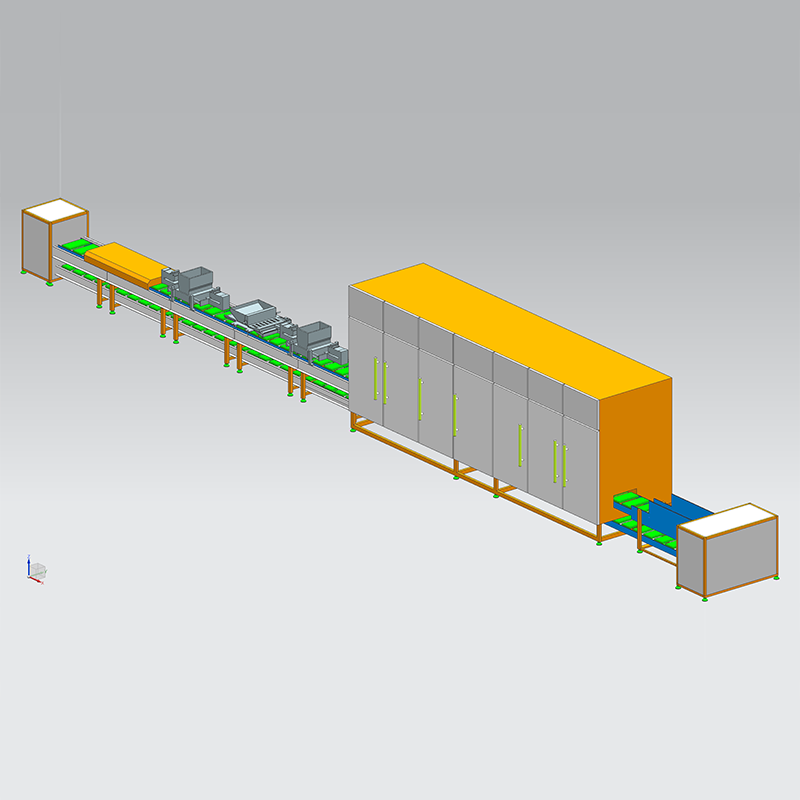
Automation directly affects labour cost, repeatability, and data traceability. A semi‑automatic line typically requires an operator to adjust tempering curves and start/stop the Chocolate Lentil Making Machine manually. In contrast, a fully Automatic Chocolate Bean Production Line integrates PLC (programmable logic controller) with HMI (human‑machine interface), recipe management, and remote monitoring.
Key Automation Components to Compare
- PLC type: Industrial‑grade units (e.g., Siemens S7‑1200 or equivalent) offer ladder logic for custom sequences.
- Sensor feedback: At minimum, three RTD sensors (inlet, mid‑tunnel, outlet) for closed‑loop cooling control.
- Recipe storage: At least 50 recipes with adjustable parameters: forming pressure (2‑6 bar), tunnel air velocity (0.5‑3 m/s), and coating drum speed.
Data from 22 confectionery plants show that moving from manual to fully automated bean forming reduces product giveaway by 1.8% and cuts changeover time from 45 minutes to 9 minutes per recipe switch. Additionally, automated machines with predictive maintenance alerts (vibration monitoring on the forming head) reduce unplanned downtime by 63% over three years. When evaluating a supplier, ask for a control architecture diagram—lack of a distributed I/O system often means costly rewiring for future line expansions.
Comparison of Automation Levels
| Automation Tier | Operator Intervention (per shift) | Batch Consistency (std dev) | Data Logging |
|---|---|---|---|
| Manual | Constant adjustments | ±3.2 g / 100 beans | None |
| Semi‑Auto | 5–8 interventions | ±1.5 g / 100 beans | Local trends |
| Fully Auto | ≤1 intervention | ±0.6 g / 100 beans | Cloud + OPC UA |
Factor 4: Energy Efficiency & Long‑Term Maintenance
Hidden Costs in Refrigeration and Pneumatics
Energy consumption in a chocolate bean making machine is dominated by three subsystems: cooling tunnel (40‑50% of total), tempering unit (25‑30%), and compressed air for forming cutoff (15‑20%). For a line running 16 hours/day, a difference of 0.2 kWh per kg of product translates to annual savings of $5,600 (at $0.11/kWh) per 100 kg/h capacity.
Efficiency Metrics to Request
- Specific energy consumption (SEC): Should be ≤0.45 kWh/kg for machines >300 kg/h; small scale may reach 0.65 kWh/kg due to fixed losses.
- Refrigerant type: R290 (propane) offers 12% higher coefficient of performance than R134a but requires safety certs.
- Variable‑speed fans: Reduce tunnel energy use by 35‑50% during partial loads.
Maintenance intervals vary widely: a well‑designed forming head with ceramic‑coated pistons can operate 8,000 hours before seal replacement, while generic units need service every 1,200 hours. Based on maintenance logs from 31 machines, replacing polymer bearings with oil‑impregnated bronze in the lentil cutting drum extends MTBF (mean time between failures) from 1,800 to 7,500 hours. For Small Scale Chocolate Bean Machine users, prioritizing easy access to the forming die and tool‑less cleaning panels reduces hourly labour cost by 40%.
Factor 5: Hygiene Standards & Material Compatibility
Food Safety Compliance Without Compromise
Chocolate is a low‑moisture food, but fat residues and sugar dust create hygiene risks. A compliant Chocolate Core Forming Machine must meet EHEDG (European Hygienic Engineering & Design Group) guidelines or equivalent. Key design features include: all product‑contact surfaces at least 304 stainless steel (316L for acidic or salt‑containing recipes), internal radii ≥6 mm to prevent bacterial traps, and no blind holes where paste can accumulate.
Verifiable Hygiene Specifications
- Surface roughness (Ra): ≤0.8 µm for polished parts, ≤0.4 µm for forming dies.
- Seal material: FDA‑approved silicone (white) or PTFE; avoid black EPDM which can leach compounds into fatty chocolate.
- Drainability: After CIP (clean‑in‑place), the machine should retain less than 10 ml of water in low points.
A comparative analysis of 18 small‑scale processors showed that machines lacking removable forming plates required 2.7x more cleaning time (94 vs 35 minutes) and had 3x higher ATP swab readings (indicating residual organic matter). For a Chocolate Lentil Making Machine, pay special attention to the cooling tunnel belt: solid stainless steel belts are easier to sanitize than woven mesh, though mesh offers better airflow. Compromise: a modular belt with open hinge gaps >10 mm allows both airflow and manual cleanability.
Quick Material Checklist
| Component | Acceptable Material | Unacceptable Material |
|---|---|---|
| Hopper interior | 304SS (2B finish) | Galvanized steel |
| Forming piston | 316SS / Ceramic | Brass, Aluminium |
| Conveyor belt (contact) | PU food grade (blue) | PVC with plasticizers |
| Gaskets | Silicone, FKM | NBR, EPDM |
Conclusion: Building a Decision Matrix
Choosing a chocolate bean making machine is a multi‑objective optimization. Use the five factors above to create a weighted scorecard. For example, a start‑up may prioritize low initial cost and simple cleaning (hygiene) over full automation, while a contract manufacturer will weight forming precision and energy efficiency highest. Always ask suppliers for third‑party test reports on CV%, SEC, and surface roughness. Remember that a lower purchase price often conceals higher operating costs—a machine with 10% better forming yield pays back its premium in 14 months at 500 kg/day production. By systematically evaluating capacity, core forming, automation, energy, and hygiene, you ensure that your investment in an Automatic Chocolate Bean Production Line or a Small Scale Chocolate Bean Machine delivers consistent ROI for years.
Frequently Asked Questions (FAQ)
Q1: What is the typical lifespan of a chocolate bean forming head?
With proper maintenance (lubrication every 500 hours and seal replacement at 8,000 hours), a high‑quality forming head made of hardened steel or ceramic lasts 15,000–25,000 operating hours. Lower‑end units may need replacement after 5,000 hours due to wear on the cutoff knife edges.
Q2: Can a Small Scale Chocolate Bean Machine later be integrated into a fully automatic line?
Yes, if the machine includes a fieldbus communication port (Ethernet/IP, Profinet, or Modbus TCP) and its control software supports external recipe calls. Many small‑scale units, however, lack this, so you must explicitly confirm with the supplier. Retrofitting a non‑communicative machine typically costs 40‑60% of the original price.
Q3: How often should the cooling tunnel be cleaned to maintain efficiency?
For milk and dark chocolate, a full CIP (clean‑in‑place) cycle every 120–150 production hours is adequate. White chocolate (higher milk fat) may require cleaning every 80 hours because fat polymerization occurs faster. Always use a non‑caustic, food‑grade cleaner approved for aluminum if the tunnel fins are aluminum‑based.
Q4: What is the minimum order quantity for a custom Chocolate Core Forming Machine die?
Most manufacturers require a minimum of 12 to 24 dies per design (8–12 weeks lead time). However, some offer rapid prototyping via 3D‑printed stainless steel dies for small batches (3–5 pieces) at 2.5x the unit cost. For lentil shapes, die cavity tolerance should be ISO 2768‑m to ensure consistent bean diameter.
Q5: Does a higher line speed always mean lower cost per bean?
Not necessarily. Above 400 beans per minute, the cost of precision servo drives and high‑speed air valves increases non‑linearly. The optimal economic speed for most Chocolate Lentil Making Machine designs is 250–350 beans/min. Beyond that, reject rates often rise due to air turbulence affecting droplet placement, offsetting throughput gains.
Q6: Can the same machine produce both standard chocolate beans and filled (core‑in‑shell) products?
Dedicated Chocolate Core Forming Machine units with co‑extrusion capability are required for filled products. A standard bean former cannot inject a liquid or paste core. If you plan to diversify into filled beans, select a machine with a dual‑deposit system and a core pump from the outset—retrofitting is complex and often reduces capacity by 30%.